


 About Us
 Terms
Terms
 Privacy
 Community Guidelines
How a Marginalized Community in Zombo District Continues to Face Severe Barriers to Essential Social Services as Nyagak Paa Bruno Bridge Remains Unreconstructed
By Mike Rwothomio
Zombo District, Uganda : A vulnerable agrarian community in Yil Village, Anyola Parish, Atyak Sub-County, Zombo District, West Nile Sub-Region, remains in a state of geographic isolation and social exclusion due to the ongoing absence of critical infrastructure, particularly the dangerous and frequently destroyed Nyagak Paa Bruno footbridge, which has claimed over 20 lives since 2007.
A recent visit involving a challenging 30-kilometer journey from Paidha Town Council revealed the extent of infrastructure deficits.
Road connectivity is severely compromised, characterized by numerous potholes, stagnant water pools, narrow passages, and overgrown bush, making motorcycle travel more arduous than walking.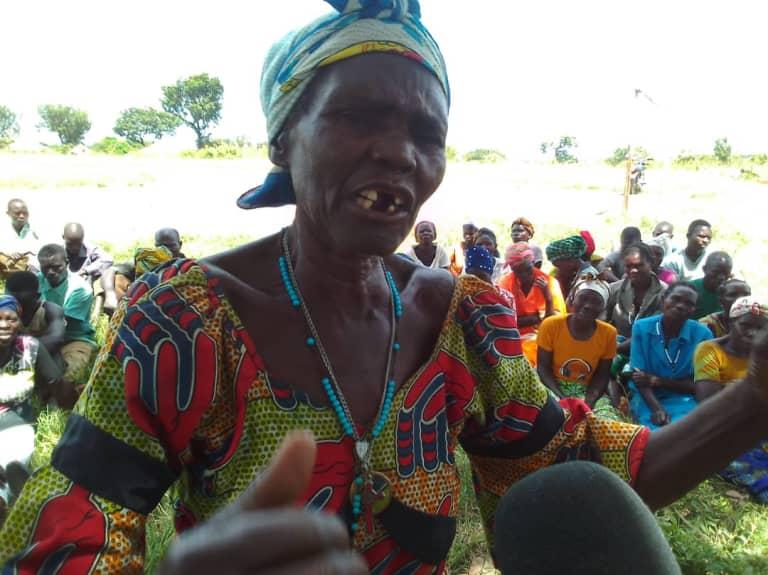
Salotha Anirwoth, 68, appealed for a local market; Abakamel is too distant for elders.
En route, journalists yielded to trucks transporting farmers and their produce to Paidha's main market, underscoring the community's reliance on agriculture despite barriers to market access.
Access to safe water and sanitation remains a critical gap. Running low on water, the visiting team resorted to drinking from Awer Stream in Kalwang, Nebbi District, the sole water source for the local population, shared with livestock.
Children were observed fetching water in small jerrycans. A 15-year-old girl confirmed, smiling calmly, "This is our only water source here, even animals drink from it."
Throughout the journey, poor and bushy roads posed continuous hindrances. Grass-thatched houses dotted the landscape en route to Yil, yet active farming indicated a substantial population.
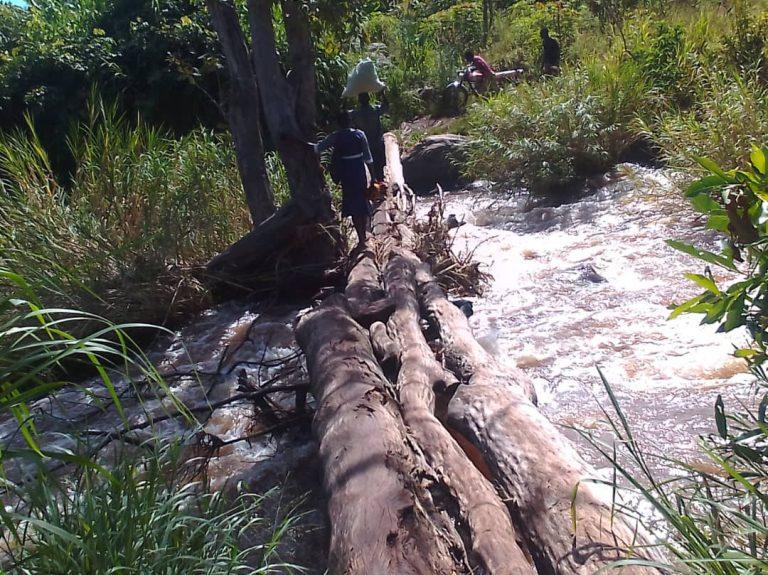
The most perilous segment was crossing the approximately 20-meter locally constructed footbridge over the Nyagak River, the only access point to Yil.
Over ten community members welcomed visitors from across the river, encouraging the crossing of what locals call the "death trap."
One journalist crossed first under observation; traversal demanded extreme caution, with any misstep risking fatality or slim survival odds. The group proceeded slowly amid cheerful jokes from residents.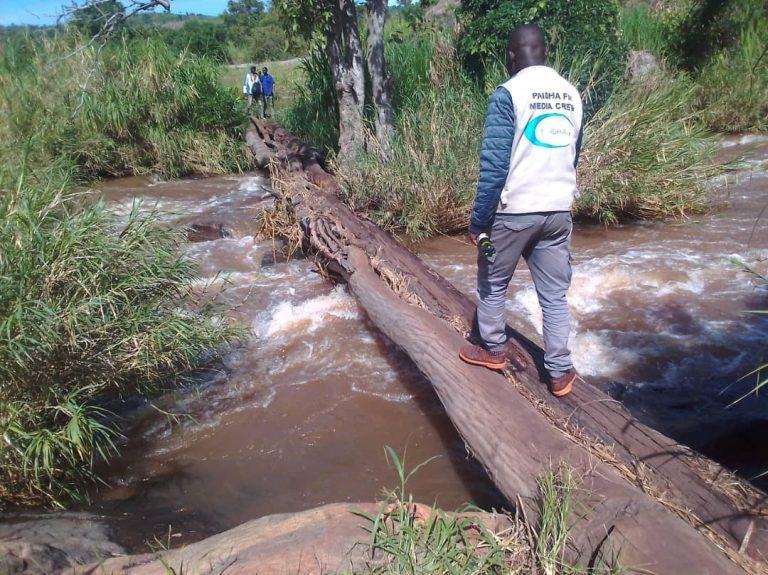
A journalist risk to cross the death trap Bridge.
The footbridge consists of just four logs, narrow and spanning over 18 meters, yet Yil Village, is a home to 2,244 residents across 374 households from diverse ethnic backgrounds that has settled for over 20 years. Observations confirmed absence of any health facility, school, market, or reliable roads.
A local playground has served as a polling station since 2006, indicating awareness among authorities.
LC1 Chairperson Phillip Okwonga Jawiambe stated the community has "survived by the grace of God," accusing politicians of empty promises on clean water and road improvements limited to election periods.
He appealed to NGOs, well-wishers, and government for assistance."We started staying here many years ago but we are only valued during election period... politicians come here and give us promises which they don't fulfil," Okwonga said.
Residents expressed gratitude for financial aid from Ora County MP Biyika Lawrence Songa supporting community initiatives.
Surrounded by rivers including Nyagak, Ojong, Yil, and Awer, the population exceeds 2,000. Locals have mobilized resources to repair minor footbridges for temporary relief.
The primary concern remains the Nyagak Paa Bruno footbridge linking to Nebbi District, Paidha Sub-County, and Town Council.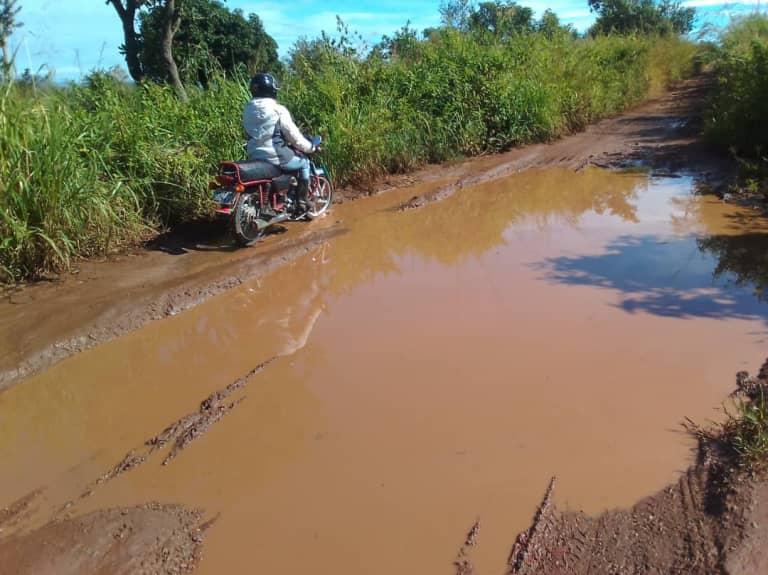
The road's impassability created major hardships for the community, cutting off supplies and travel.
Chairperson Nuru Wathum expressed frustration over its condition, reporting 22 fatalities since 2007, including two mothers drowning in 2022.
"I just call for help from government, MPs, NGOs... We just need some materials to fix the bridge on our own... Since 2007, we lost 22 lives on that footbridge alone," Wathum said, adding, "If they can't help us, it's ok, we shall wait for them during election time."
The community is entirely disconnected from health service delivery. No local facility exists; emergencies rely on traditional birth attendants, Okwong, LCI chairperson of yil said in an interview on January 3, 2026.
Nearest options, Ther Uru Health Center II (over 10 km) or Azingu Health Center III in Nebbi, require crossing the risky footbridge, especially dangerous at night.
Residents speak out
Resident Joyce Apio, 58, nearly lost her daughter-in-law to miscarriage complications due to distance and poor connectivity.
"I almost lost my daughter-in-law... I just call upon our government to bring health facility for us here, we are living here as if we are not human beings," Apio said in an interview on January 3, 2026.
Jennifer Kasamba, mother of four, highlighted inequities: "We vote in each election... but we are not valued... it's like hell here."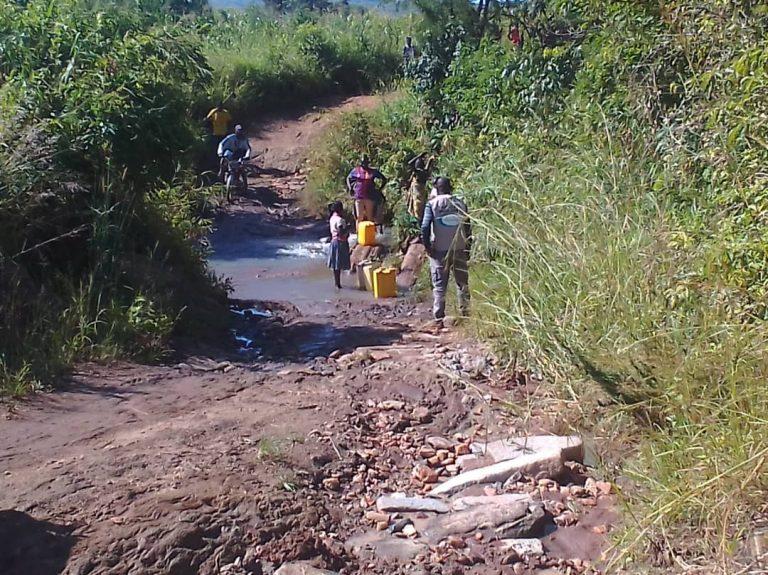
The Awer stream serves as a vital source of clean water for the local community, providing water for drinking and daily needs.
Of the 2,244 residents, 548 are school-going age. The community-run Pangang Primary School operates only to Primary 3, staffed by locally paid secondary-educated teachers, according to local leaders.
The nearest public school, Nyadima Primary, is over 12 km away and Piyic Jennifer, a primary six pupil learner said when Rain swells footbridges, all access to schools are blocked. This she said has made many learners to drop out of schools.
Elderly resident Oryem Wilson, 72: "We don't have options, we just keep our children at home... The only government school of Nyadima is very far."
Salotha Anirwoth, 68, appealed for a local market; Abakamel is too distant for elders.
Despite hardships, cultural practices foster social cohesion: Evening traditional xylophone sessions attract hundreds; Saturdays are reserved for communal service, with no gardening in the agrarian community.
Residents refuse to abandon the fertile land, evidenced by stored sacks of cassava, beans, maize, and other crops.
Flash floods have repeatedly washed away the Nyagak Paa Bruno Bridge, severing links between Nebbi and Paidha Sub-Counties, isolating communities and restricting essential services access.
The structure, dilapidated since 2007, caused over 20 deaths, including a four-year-old child in May 2024.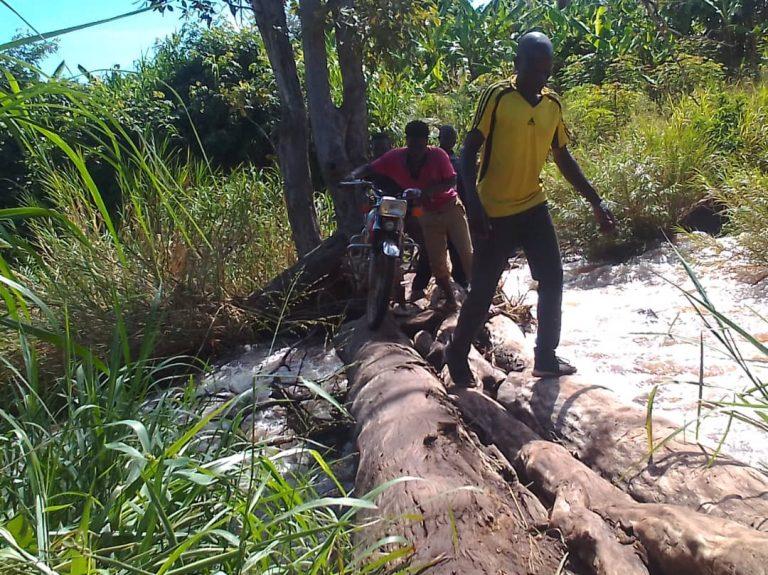
A group of local youths assists visitors by pushing or guiding their motorcycles across the bridge for a small fee.Photo/ Mike Rwothomio.
As of now, Stranded timber logs purchased by a well-wisher for repairs remain over 30 km away in Paidha town council.
Leaders Nuru Wathum and Phillip Okwonga appealed for logistical support.
The major Nyagak Paa Bruno Bridge, Although prioritized under the World Bank-funded Uganda Climate Smart Agricultural Transformation Project (UCSATP) for reconstruction alongside 21.5 km of roads, as announced in 2025 by district leaders including LCV Chairperson James Oruna Oyullu and MP Biyika Lawrence Songa, construction has yet to commence as of early 2026.
The project aims to enhance climate resilience, agricultural productivity, and market access for vulnerable populations.
Residents expressed hope for the "life-saving" infrastructure, while community self-reliance persists amid delays.
Leaders speak out
According to the LCV chairperson of Zombo district James Oruna Oyullu, preliminary assessments for the bridge and road have been completed, with further details on the work commencement date forthcoming.
“ the assessment is done, and we are optimistic about delivering this critical infrastructure to enhance connectivity and boost productivity for the communities of Zombo and Nebbi” Oyullu stated in an interview.
Songa Biyika Lawrence, MP for Ora County and Chairperson of the Parliamentary Climate Change Committee, confirmed that Zombo is among 37 districts selected for the climate-resilient infrastructure pilot project under UCSATP.
“This project includes the Nyagak Paa Bruno Bridge, Adhi footbridge, and key roads like Patera-Abakamel-Uru-Nyadima-Yil, which will improve market access and resilience for local farmers,” Songa noted.
The Bridge according to the leaders, will be constructed under the UCSATP, implemented by the Ministry of Agriculture, Animal Industry, and Fisheries in collaboration with agencies like the National Agricultural Research Organization (NARO), National Animal Genetic Resources Centre and Data Bank (NAGRC & DB), and Uganda National Meteorological Authority (UNMA), targets 69 districts across 13 agroecological zones. The initiative prioritizes climate-vulnerable watersheds, poverty levels, and environmental degradation to enhance agricultural productivity and market access.
Local residents, including Nuru Wathum, Chairperson of the Yil Rural Farming Community Association, expressed relief at the government’s commitment. “We’ve lost over 20 lives on this footbridge since 2007. Its reconstruction will be a game-changer for our community,” Wathum said.
Similarly, Philliph Okwonga Jawiambe, LCI Chairperson of Yil Village, described the project as a “life-saving venture” for the farmers.
Despite community efforts to repair the footbridge, logistical challenges, such as transporting materials from Paidha Town Council over 20 kilometers away, have hindered progress.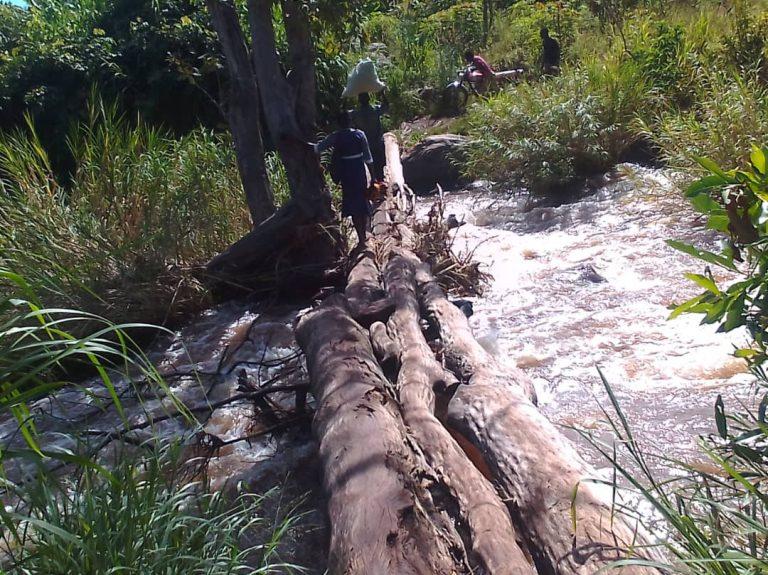
The Nyagak Paa Bruno Bridge that that has become a death trap for the rural community.
According to Zombo leaders, The Nyagak Paa Bruno Bridge project is poised to drive economic growth for Zombo and Nebbi’s agrarian communities, marking a significant step toward climate-resilient infrastructure development.
The bridge, located in the Omyer Forest Reserve, is used by both pedestrians and motorcyclists, who risk their lives to transport agricultural produce.
Mike Rwothomio is news editor at zoomer Africa your number one grassroot information hub

 English
 Arabic
 French
