
 About Us
 Terms
Terms
 Privacy
 Community Guidelines
Tenfold Growth: Will West Nile Be a Producer or Just a Market?
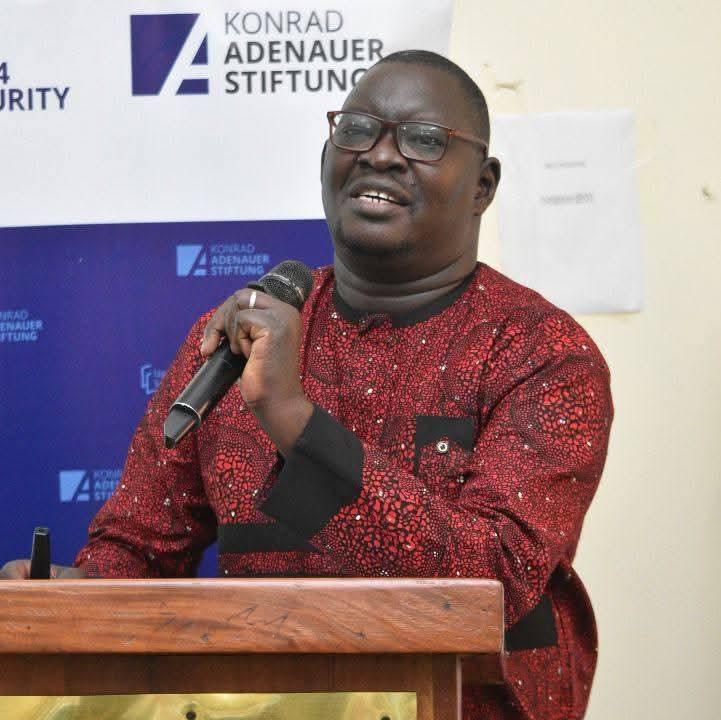
By Moses Akuma Odims
We have the fertile soil. We have the coffee, the cocoa, the energetic youth, the 180 megawatts of power waiting to be used, and five industrial parks already marked on the map in Moyo, Yumbe, Koboko, Madi-Okollo and Nebbi. We sit on the doorstep of Congo and South Sudan — two of the biggest markets on this continent.
With all this, West Nile has no excuse to be poor.
Uganda wants to grow its economy tenfold — from $53 billion to $500 billion by 2040. It will ride on four pillars: Agro-Industrialisation, Tourism, Minerals, and Science & Innovation. The plan is called ATMS, and the vehicle is National Development Plan IV.
The question is simple: When Uganda grows ten times, will West Nile grow with it as a producer, or will we remain what we are today — a giant market for things made by others?
For the next Five years WENDA leaders have listed what needs to be done. Ten actions: Regional Development Plan, Demonstration farms, industrial parks, mechanisation, irrigation, seed banks, markets, mindset change. All correct. But ten priorities means no priority.
We need to focus. Three things only. If we get these three right, everything else falls into place.
1.Make the industrial parks work. Now.
Empty land does not create jobs. We have allocated the land. The President has promised support. Power is there.
Yet our parks are still empty fields.
This is our biggest betrayal of our own youth. These parks must become what they were meant to be — factories that turn our coffee into instant coffee, our groundnuts into peanut butter, our mangoes into juice, our cassava into flour.
If we process here, wealth stays here. Jobs stay here. If we don't, we will continue selling raw cocoa for pennies and buying back chocolate at a premium. That is not an economy. That is colonialism by consent.
2.Produce like we mean business.
A factory without raw materials is just an expensive warehouse.
We cannot industrialise on subsistence farming. We need a Regional Mechanisation Centre and Seed Bank that actually works. We need irrigation on our rivers that feed the Nile so we produce all year, not just when it rains.
This means we must stop romanticising the hoe. Farming must become a business. One acre of coffee or cocoa farmed properly can pay school fees, power bills, and leave savings. But that only happens with quality seed, machines, water, and training that shows, not tells.
We have to move from "I farm to eat" to "I farm to supply a factory."
3. Build the system that protects the investment.
You can have factories and farms, but if you have no market, no integrity, and no local ownership, you have nothing.
We must connect our farmers directly to buyers in Congo, South Sudan, and Kampala. We must deliberately buy West Nile-made goods. Every time a hotel, school or hospital imports what we can produce here, we export a job.
We must institutionalise Local Economic Development so our districts plan for production, not just expenditure, consumption of central government grants. And we must fight corruption ruthlessly. A stolen seed fund is a stolen harvest. A stolen road fund is a stolen market.
Most importantly, we must change our mindset. No one is coming to save West Nile. Not Kampala. Not an NGO. The saviour is us, pooling our VSLAs, our cooperatives, our labour.
This is not a job for leaders alone.
Leaders can allocate land. Investors can bring machines. But only communities can make this real.
Under Priority One, communities must organise into cooperatives that guarantee quality and volume for the markets, parks, send their children to be trained as machine operators and quality controllers, and buy what the parks produce.
Under Priority Two, communities must leave subsistence behind, join demonstration plots, pool money to hire tractors, and treat post-harvest loss as a sin.
Under Priority Three, they must own the change — monitor the Parish Development Model to ensure it funds production, demand transparency at parish planning meetings, and use our churches, mosques and cultural leaders to say: enough with dependency.
The choice is stark.
We can continue as we are: young people idle on boda bodas, wealth leaving West Nile every day on trucks loaded with raw produce, waiting for the next donor project.
Or we can decide to produce.
Regions that transform are not those without problems. They are those that refuse to be defined by them.
The land is there. The power is there. The market is there. The national strategy is aligned.
What remains is execution. With urgency.
The time is now.
Mr. Moses Akuma Odims is the Executive Director of the West Nile Development Association (WENDA).
 English
 Arabic
 French
