


 About Us
 Terms
 Privacy
 Community Guidelines
Rodent Control NYC: Ways to Protect Your Home and Business From Rats and Mice
Introduction
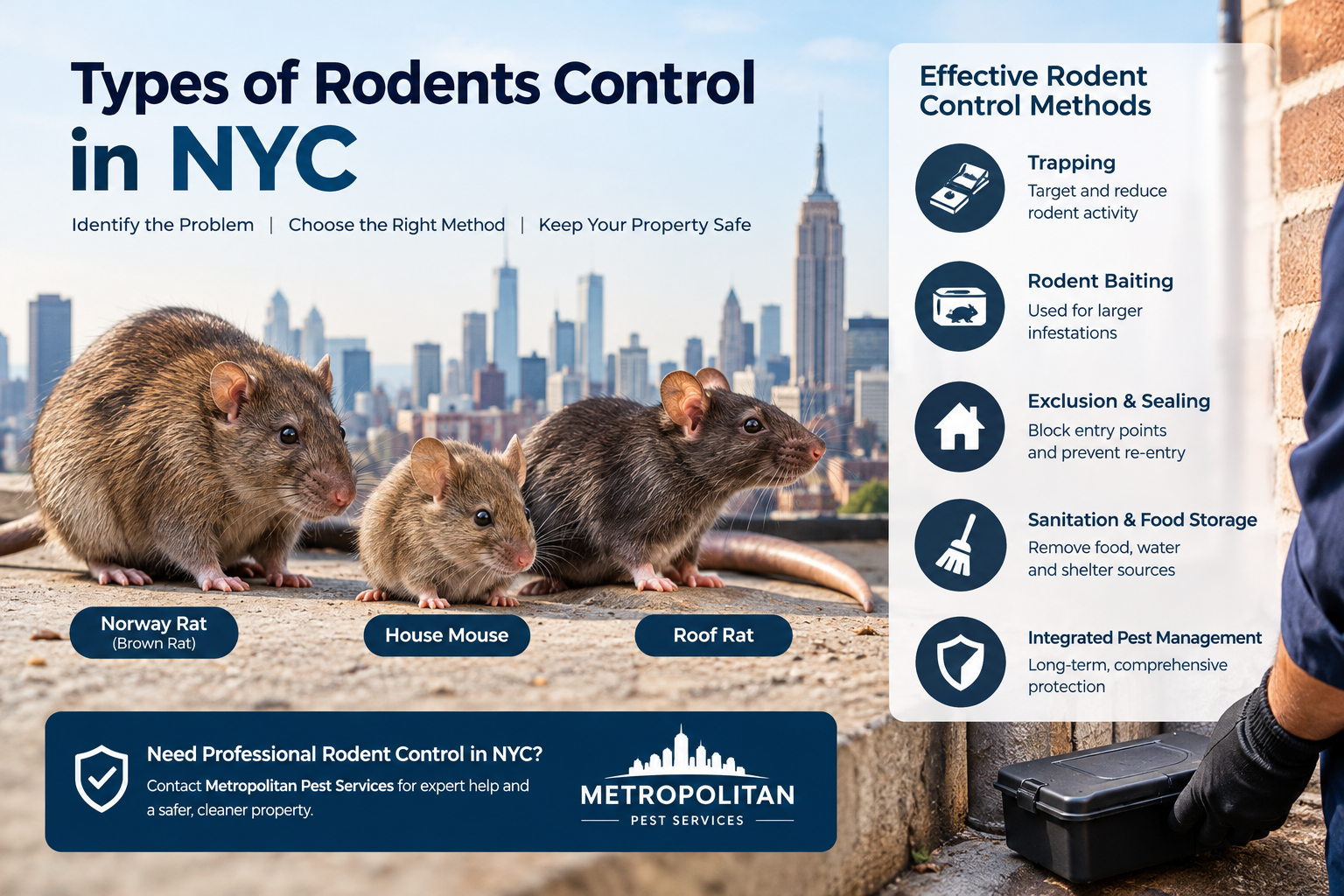
Rats and mice can create serious problems for homeowners, landlords, and business owners in New York City. These rodents can contaminate food, damage property, chew electrical wiring, and leave droppings in areas where people live, work, cook, and store supplies. Because rodents can squeeze through small openings and survive in a variety of environments, preventing an infestation requires more than simply setting a trap.
Effective rodent control NYC strategies focus on removing food sources, limiting access to buildings, reducing hiding places, and identifying signs of rodent activity early. Whether you manage a residential property, restaurant, office, retail store, or warehouse, consistent prevention can help reduce the risk of an infestation.
Metropolitan Pest Services offers rodent control alongside bed bug treatment and roach control. Understanding how rodents enter and survive in buildings can help you protect your property and recognize when professional pest control may be necessary.
Why Is Rodent Control Important in NYC?
New York City properties can present several conditions that attract rats and mice, including closely spaced buildings, shared walls, basements, utility openings, garbage storage areas, and spaces around pipes. Construction activity and access to food waste can also influence where rodents travel and nest.
Rats and mice may enter buildings through damaged doors, gaps around plumbing, foundation cracks, vents, and other openings. Once inside, they can hide behind appliances, inside wall cavities, beneath storage shelves, and in other undisturbed areas.
Rodent prevention is particularly important for businesses that handle food or maintain inventory. An infestation can affect cleanliness, damage stock, and create concerns for employees and customers. In homes, rodents can contaminate storage areas and damage personal belongings.
The best approach is to combine preventive measures with early detection instead of waiting until rodent activity becomes widespread.
1. Seal Entry Points Around Your Property
One of the most effective ways to prevent rodents is to make it harder for them to enter your building.
Inspect doors, windows, and foundations
Examine the exterior of your property for cracks, holes, damaged weather stripping, and gaps around door frames. Pay special attention to basement windows, garage doors, utility entrances, and areas where different building materials meet.
Mice can enter through openings approximately one-quarter inch wide, while rats can use openings around one-half inch wide, depending on the circumstances.
Seal gaps around pipes and cables
Rodents may enter through openings surrounding plumbing lines, electrical conduits, heating systems, and other utility connections. Seal suitable gaps with durable, rodent-resistant materials. Steel wool may help in some small gaps when secured properly, but it should not be used alone where moisture, fire safety, or electrical hazards are concerns.
Install appropriate door sweeps, repair damaged screens, and use suitable mesh or metal barriers over openings where ventilation must be maintained.
Practical tip: Inspect your property regularly, particularly after construction, plumbing repairs, or maintenance work. Even a small gap can create an opportunity for rodents to enter.
2. Store Food Properly and Remove Food Sources
Rodents are more likely to remain in places where food is easy to find. Removing accessible food can make your property less attractive.
In homes
-
Store dry foods, cereals, grains, and pet food in tightly sealed, rodent-resistant containers.
-
Clean crumbs and food spills promptly.
-
Avoid leaving pet food out overnight.
-
Wash dishes regularly and clean beneath kitchen appliances.
-
Keep pantry shelves organized so signs of rodent activity are easier to notice.
In businesses
Restaurants, grocery stores, offices, and commercial kitchens should maintain consistent food-storage and cleaning procedures. Keep ingredients in suitable sealed containers, clean food preparation areas, and inspect storage shelves for damaged packaging or droppings.
Staff should know how to report signs of rodents and follow established cleaning schedules. Food waste should be removed routinely rather than allowed to accumulate.
Remember that even a clean building can experience rodent activity. Sanitation reduces attractants, but it does not replace sealing entry points or investigating existing infestations.
3. Manage Garbage and Outdoor Areas
Poorly managed waste can provide rodents with both food and shelter.
Use durable garbage containers with tightly fitting lids, and avoid leaving rubbish bags exposed for long periods. Follow the appropriate collection schedule and clean spills around waste storage areas.
For commercial properties, keep waste storage zones orderly and ensure that bins are not overflowing. Where practical, position waste containers away from building entrances and maintain a clear space around them for inspection and cleaning.
Outside the building, remove unnecessary clutter, cardboard piles, and unused materials that could provide shelter. Keep vegetation maintained around the foundation and avoid storing firewood or equipment directly against exterior walls.
These steps are particularly useful for properties with shared yards, rear service areas, loading docks, or basement entrances.
4. Look for Early Signs of Rats and Mice
Finding rodent activity early can help prevent a small problem from becoming a larger infestation.
Common warning signs
Watch for:
-
Droppings: Small, dark pellets near food storage areas, along walls, or behind appliances.
-
Gnaw marks: Damage to packaging, wood, plastic, or other materials.
-
Scratching sounds: Noises inside walls, ceilings, or beneath floors, particularly at night.
-
Nesting materials: Shredded paper, fabric, insulation, or other soft materials collected in hidden spaces.
-
Grease marks and tracks: Smudges along frequently used routes or tracks in dusty areas.
-
Damaged food packaging: Holes, torn bags, or unexplained contamination.
Check basements, kitchens, storage rooms, utility spaces, and areas behind equipment. Businesses should also inspect receiving areas, stockrooms, and spaces around waste containers.
Avoid sweeping or vacuuming rodent droppings while dry. Wear suitable protective equipment, disinfect the affected area using an appropriate product according to its label, and follow public health guidance for safe cleanup.
5. Use Traps and Other Control Measures Carefully
Traps can help manage rodent activity when selected and positioned correctly. Snap traps are a commonly recommended option for controlling mice and rats inside buildings.
Place traps near walls and along areas where rodent activity has been observed, while keeping them away from children, pets, and unauthorized access. Check traps frequently and follow the manufacturer's instructions.
Avoid relying on random trap placement or using traps without addressing the reason rodents entered the property. If food remains accessible and entry points remain open, new rodents may continue to appear.
Rodenticides require particular caution. Incorrect use can expose children, pets, wildlife, and other non-target animals to harmful substances. If rodenticides are considered necessary, use only legally permitted products according to their labels and applicable requirements. Professional guidance may be appropriate, especially in occupied buildings or commercial environments.
6. Protect Commercial Buildings With Routine Inspections
Businesses often need a more structured rodent prevention plan because food storage, deliveries, waste handling, and frequent movement can create additional opportunities for rodents.
A practical commercial prevention program should include:
-
Routine inspections of storage rooms, kitchens, basements, and loading areas.
-
Sealed food and waste containers.
-
Prompt repair of damaged doors, screens, and exterior openings.
-
Regular cleaning beneath equipment and shelving.
-
Documentation of sightings, droppings, damage, and corrective actions.
-
Staff training on reporting rodent activity.
Property managers should also consider shared building systems. Rodents may travel through utility spaces, wall cavities, basements, and other connected areas. In multi-unit buildings, coordinating inspections and repairs can be more effective than treating only one apartment or business suite.
7. Know When to Contact a Professional Pest Control Service
DIY prevention can reduce the risk of rodent activity, but recurring sightings or widespread evidence may indicate an established infestation.
Consider professional assistance if you repeatedly see rats or mice, discover fresh droppings in multiple areas, find damaged wiring or food packaging, or continue to experience activity despite cleaning and sealing accessible gaps.
A professional assessment can help identify likely entry points, nesting areas, and contributing conditions. A suitable treatment plan should address both active rodents and the conditions that allow them to enter or remain on the property.
Rodent Control NYC With Metropolitan Pest Services
Metropolitan Pest Services provides rodent control as part of its pest management services, alongside bed bug treatment and roach control.
If you suspect rats or mice in your home or business, consider arranging an assessment to determine the nature of the problem and the appropriate next steps. Addressing the issue early can help limit further property damage and support a cleaner, better-protected environment.
Protect your property with a prevention-first approach. Contact Metropolitan Pest Services to discuss your rodent concerns and available pest control options.
Frequently Asked Questions
1. What attracts rats and mice to NYC homes?
Accessible food, uncovered garbage, water, clutter, and sheltered nesting spaces can attract rodents. Openings around doors, foundations, and utility lines allow them to enter buildings.
2. How can I prevent mice from entering my home?
Seal openings, repair door sweeps and damaged screens, store food in secure containers, remove waste regularly, and inspect areas where plumbing and cables enter the building.
3. Are rats and mice dangerous?
Rodents can contaminate food and surfaces, damage property, and create health concerns through their droppings, urine, and other contamination. Avoid direct contact with rodents and their waste.
4. Can I get rid of rats and mice with traps alone?
Traps can help reduce rodent numbers, but they may not solve the underlying problem. Effective control also requires removing attractants, sealing entry points, and investigating where rodents are active.
5. When should I call a rodent control professional?
Seek professional help when sightings continue, droppings appear in multiple areas, property damage occurs, or preventive measures fail to stop rodent activity.
6. Does pest control help prevent future rodent infestations?
A well-planned pest control program can help identify entry points, address active infestations, and recommend preventive measures. Ongoing sanitation, exclusion, and monitoring remain important after treatment.
Conclusion
Protecting a New York City home or business from rats and mice requires consistent attention to sanitation, building maintenance, food storage, waste management, and early detection. Sealing entry points and removing attractants can reduce the likelihood of rodent activity, while appropriate traps and professional assessment can help address existing problems.
For persistent rodent concerns, Metropolitan Pest Services offers rodent control to help property owners explore suitable pest management options. Taking action early can help protect your building, stored goods, and day-to-day operations.


 Arabic
 French
