

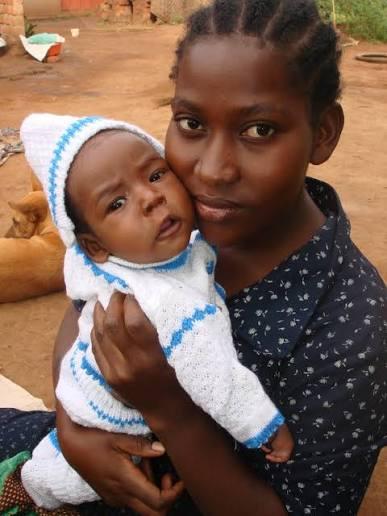
THE MOTHER WE FORGOT: Syphilis in Zombo Exposes the Hidden Weaknesses in Uganda's Maternal Healthcare System

Opinion | Zoomer Africa
Dedicated to the mothers of the Pearl of Africa, particularly the poor, rural and vulnerable women whose sacrifices keep our communities alive.
There is something deeply troubling about a mother walking into a health facility carrying the hope of bringing a healthy child into the world, only to discover that she is carrying an infection that could threaten the life of her unborn baby.
For millions of African women, pregnancy is not simply a medical experience. It is a cultural responsibility, a family expectation, a celebration of life and, in many communities, a journey carried by women who have very little financial security.
Yet, behind the beautiful traditions surrounding African motherhood lies a difficult question: Are our healthcare institutions doing enough to protect the women who give our communities their future?
Recent findings from Zombo District in Uganda deserve more than a passing news headline. They deserve national attention.
Zombo's warning: 240 mothers tested positive
According to a report published by Zoomer Africa on November 19, 2026, syphilis emerged as the leading infection detected among pregnant women screened in Zombo District during April–June 2026.
Of the 2,461 pregnant women tested, 240 were found positive, representing approximately 10 per cent.
The figures from individual health facilities are equally concerning:
-
Jangokoro Health Centre III recorded 15 per cent positivity.
-
Alangi and Zeu Health Centre III each recorded 13 per cent.
-
Paidha Health Centre III recorded 53 positive cases among 619 women tested.
-
Kango recorded 8 per cent positivity.
These are not merely percentages on a district performance chart. Behind every positive result is a woman, a family and potentially an unborn child whose health depends on what happens next.
There is, however, one encouraging finding: the district report indicated that all 240 women who tested positive had been started on treatment.
That is progress worth acknowledging. But it also raises another question: were all these mothers able to complete treatment, receive appropriate follow-up and protect their unborn children from congenital syphilis?
Starting treatment is important. Ensuring successful treatment and protecting the newborn is the ultimate objective.
The bigger question: What happens inside our health centres?
Uganda has invested in maternal healthcare, antenatal services and the prevention of mother-to-child transmission of infections. However, the existence of health facilities does not automatically mean that women receive quality healthcare.
A 2025 study titled Barriers to Routine Antenatal Syphilis Screening in Uganda: Provider Perspectives and Practices, published in the SAGE medical literature, identified several weaknesses affecting antenatal syphilis services.
These included:
-
Shortages of syphilis testing kits.
-
Shortages of benzathine penicillin, a key treatment for syphilis.
-
Insufficient training and continuing education for healthcare providers.
-
Differences between official clinical guidelines and actual practice.
-
Limited involvement of male partners in preventing reinfection.
The study also highlighted the financial burden faced by women when public facilities run out of supplies and patients must seek testing or medication elsewhere.
Imagine a poor expectant mother travelling several kilometres to a health centre, spending money she does not have, only to be told that the required medicine is unavailable.
What happens next?
Does she return home and wait? Does she borrow money to visit another facility? Does she abandon treatment altogether?
These are questions that Uganda's health authorities must answer.
Healthcare should not depend on whether a woman can afford transport to another hospital or purchase medication from a private pharmacy.
The national picture: Screening is not the same as treatment
Uganda's Ministry of Health has reported considerable progress in antenatal screening.
The National Annual Maternal, Newborn and Child Health report for FY2025/26 indicates that syphilis screening among pregnant women attending antenatal care reached approximately 95 per cent.
However, syphilis treatment coverage declined from 83 per cent in FY2024/25 to 65 per cent in FY2025/26.
This difference deserves serious attention.
If the country can identify mothers carrying an infection, why are we struggling to ensure that every woman receives timely treatment?
Screening is only the beginning of healthcare. Diagnosis without treatment leaves the underlying danger unresolved.
Syphilis during pregnancy can cause miscarriage, stillbirth, premature birth, neonatal death and congenital syphilis. Yet it is preventable and treatable, particularly when detected early and managed appropriately.
A mother should not have to lose a child to an infection that our healthcare system already knows how to diagnose and treat.
The polio lesson: Prevention must come before tragedy
Uganda's experience with polio provides an important lesson about public health priorities.
For years, vaccination campaigns have been conducted across communities, including remote villages where healthcare access is difficult.
Some people may wonder why governments continue investing heavily in preventing diseases that they rarely see in their communities.
The answer is simple: prevention saves lives before a disease becomes a visible crisis.
In May 2024, Uganda detected circulating vaccine-derived poliovirus type 2 through environmental surveillance in Mbale. No human cases were reported in that detection, but the discovery triggered a nationwide response.
Millions of children received supplementary vaccinations, and Uganda officially closed the outbreak in May 2026.
That achievement demonstrates what political commitment, public health surveillance, coordinated institutions and community mobilisation can accomplish.
But there is a lesson we should not overlook.
Why should we mobilise the entire country to protect children from a disease before it causes visible paralysis, yet fail to give equal urgency to preventable infections threatening unborn children?
This is not an argument against polio vaccination. Polio prevention must continue.
It is an argument for extending that same culture of prevention to maternal healthcare.
Our mothers deserve the same institutional urgency.
The African mother: Celebrated in culture, neglected in practice?
Across the Pearl of Africa, motherhood occupies a special place in our traditions.
In Alur communities, Busoga, Buganda, Acholi, Lango, Bunyoro and other cultural societies, mothers are central to family identity, cultural continuity and community survival.
They are the women who wake up before sunrise, prepare food, cultivate gardens, care for children, support their households and preserve traditions.
In rural communities, many mothers continue working throughout pregnancy because their families depend on their labour.
Some travel long distances to health centres. Others depend on their husbands, relatives or neighbours for transport. Many face financial limitations that make repeated hospital visits difficult.
In some communities, conversations about sexually transmitted infections are surrounded by silence, embarrassment and cultural discomfort.
This silence can discourage couples from seeking testing, discussing their health or participating together in treatment.
But we must be careful not to blame African culture for failures that require institutional solutions.
Cultural sensitivity should strengthen healthcare delivery, not become an excuse for neglect.
Community leaders, traditional birth attendants, religious institutions, husbands and families should become partners in maternal health education.
A woman's positive syphilis result should never become a reason for humiliation, discrimination or domestic violence. It should become an opportunity for confidential medical care, treatment and protection.
Our mothers deserve dignity, not judgement.
Who is holding our health institutions accountable?
The Zombo findings should encourage the Ministry of Health, district health authorities and individual health facilities to examine the quality of maternal services beyond the number of women screened.
We need answers to several important questions:
-
Are Health Centre IIIs and IVs consistently supplied with syphilis testing kits and appropriate medication?
-
Are healthcare workers adequately trained to diagnose and manage infections during pregnancy?
-
Are mothers receiving treatment early enough to prevent transmission to their unborn children?
-
Are partners being encouraged to test and receive treatment where necessary?
-
Are rural women receiving follow-up care after testing positive?
-
Are district health departments monitoring treatment completion and pregnancy outcomes?
-
How are women who cannot afford transport or private medication being supported?
These are not accusations against individual healthcare workers. Many health workers serve under difficult conditions with limited resources.
The responsibility must also be examined at the institutional level: procurement, funding, staffing, supervision, accountability and the availability of essential medicines.
Uganda cannot measure maternal healthcare success by the number of women who enter antenatal clinics alone. We must also measure the number who leave those clinics protected.
Our call: Protect the mother, protect the future
Enguli Operation believes that the future of Africa begins with the protection of its people, especially the most vulnerable.
A healthy mother is not simply a family achievement. She is a national asset, a community builder and a guardian of the next generation.
The government must strengthen maternal healthcare services in rural Uganda, ensure uninterrupted supplies of essential medicines, improve health worker training and make antenatal services genuinely accessible to poor households.
District authorities should publish regular performance information that distinguishes between screening, treatment initiation, treatment completion and successful prevention of mother-to-child transmission.
Civil society organisations, community groups and development partners must also recognise that maternal health is not a luxury reserved for women who can afford private hospitals.
It is a fundamental responsibility.
We cannot continue celebrating African mothers in songs, ceremonies and cultural speeches while overlooking the conditions under which they give birth.
We cannot praise the strength of rural women while leaving them to navigate preventable health risks without adequate institutional support.
And we cannot talk about the future of Africa while neglecting the health of the women who carry that future.
The mother of the Pearl of Africa deserves more than appreciation. She deserves protection, quality healthcare and dignity.
Let Zombo become a wake-up call, not another forgotten health statistic.
Let every health centre become a place of hope rather than uncertainty.
Let every mother have access to the care she deserves, regardless of her income, village, culture or social status.
Because when we protect a mother, we protect a child. When we protect a child, we protect a generation.
Defending the dignity of African motherhood.
Zoomer Africa | Opinion & Analysis
Dedicated to the poor mothers of the Pearl of Africa.
Références
- Zombo district findings: Syphilis Leads Disease Positivity Among Pregnant Women in Zombo – Zoomer Africa
- Uganda's maternal health system: National Annual MNCH and MPDSR Report FY2025/26 – Ministry of Health
- Independent research: Barriers to Routine Antenatal Syphilis Screening in Uganda (2025). Polio surveillance: How Uganda Stopped a Silent Polio Threat – WHO, 23 June 2026