


 About Us
 الشروط
 الخصوصية
 Community Guidelines
Zombo District Launches UCSATP to Boost Climate-Smart Agriculture
By Mike Rwothomio
Zombo District has officially launched the six-year Uganda Climate-Smart Agricultural Transformation Project (UCSATP), implemented by the Ministry of Agriculture, Animal Industry and Fisheries.
The initiative targets 213 farmer groups engaged in the value chains of crops, fisheries, beneficial insects, and livestock.
The project seeks to transform livelihoods in Zombo, a district richly endowed with fertile soils, abundant water resources, and a favourable agro-climatic environment, where smallholder farmers have yet to realise significant gains from these natural advantages.
Under the initiative, farmers are organised into groups of 20 members each. These groups received training and identified their preferred enterprises.
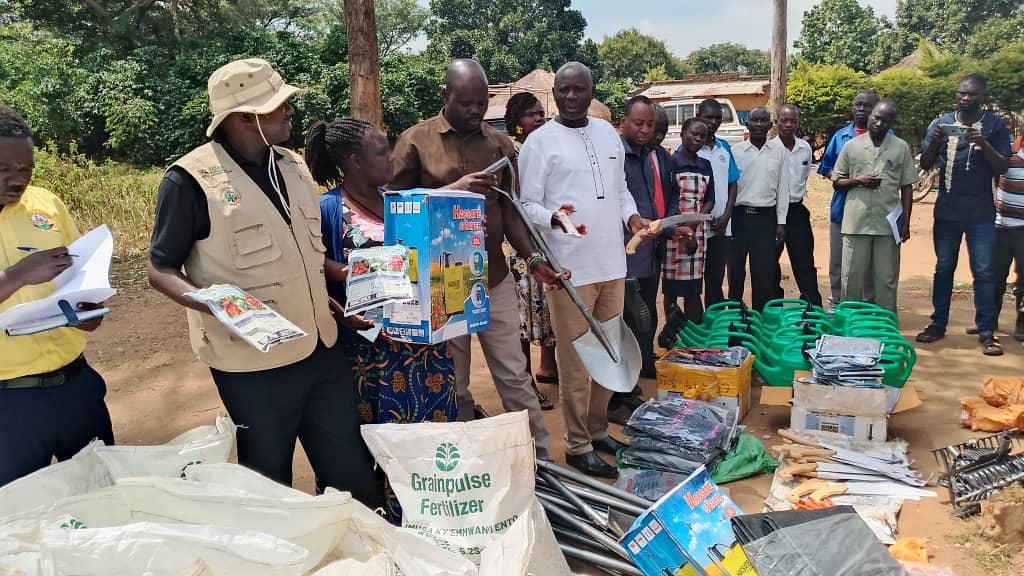
During the launch, participants were issued key agricultural inputs through an ordered e-wallet management system, with farmers actively involved in selecting items suited to their chosen enterprises.
The distributed inputs included heavy-duty cotton overalls, pressurised spray pumps , heavy-duty single-wheel iron wheelbarrows, fungicide emulsifiable concentrate (200mls), LDPE-coated tarpaulins, heavy-duty PVC gumboots, spades, rakes, NPK blend fertiliser, pruning saws, pick axes, secateurs, watering cans, fungicide granules/powder, and pangas.
The launch took place on Friday, July 10, at Areju East village, Abeju Parish, Nyapea Sub-county, involving the Udoku Mit group.
Dr Walter Kumakech, the District Production Officer, stated that the project aims “to increase productivity, market access and resilience of select value chains and respond promptly and effectively to an eligible crisis or emergency.”
He emphasized that this will address the growing frequency of climate-related shocks such as floods, prolonged droughts, and erratic rainfall.
Another group, Dikiri Medu Tegu from Mundhel Parish, also received inputs to enhance production.
The World Bank-funded UCSATP operates in 69 districts across Uganda out of 176 total districts. In the West Nile region, it covers four districts: Zombo, Nebbi, Adjumani, and Yumbe.
Dr. Kumakech said the project will tackle market access challenges by linking farmers to markets, with market linkage identified as a core component with emphasis on value addition on produced commodities.
Under the project, the Selected farmers will be mobilised to form higher-level farmer associations and cooperatives.
Zombo's 12 groups per sub-county across 10 lower local governments have been selected to promote crop value chains, focusing on soya beans, coffee, and mango.
Under livestock production, beef enterprises are being promoted among 30 farmer groups in five lower local governments: Alangi, Aka, Zeu, Atyak, and Paidha sub-counties.
For commercial pasture production, Dr Kumakech noted that the district has undertaken planting on 100 acres of pastures.In the fisheries value chain, fish pond farming (aquaculture) is being promoted among 8 groups, four in Alangi and four in Paidha sub-counties.
Under the beneficial insects value chain, 10 groups are engaged in beekeeping and black soldier fly production, with black soldier fly activities scattered across town councils and beekeeping similarly distributed.
“We are looking at how we can increase productivity amidst the climate change challenges,” Dr Walter Kumakech said, adding that “the farmer groups are going to be mobilised to form higher-level farmer associations and cooperatives.”
Uganda remains a low-income country with a predominantly agrarian economy, where agriculture serves as the backbone of national development, employing over 70 per cent of the population, the majority in rural areas.
Despite sustained economic growth, poverty persists as a major challenge, especially in northern and eastern regions, affecting 20.3 per cent of the population as of 2019/20, according to the Food and Agriculture Organization.
The Government’s long-term development strategy, guided by Vision 2040 and the forthcoming Fourth National Development Plan (NDP IV), prioritises inclusive rural transformation, sustainable industrialisation, and enhanced agricultural productivity.
The UCSATP will support Uganda in identifying, developing, and incentivising the adoption of climate-smart agriculture technologies and management practices.
Mr Festus Ayikobua, the Resident District Commissioner, urged farmer groups to ensure the project delivers tangible impacts at the family level. He called on extension workers to work closely with farmers, delivering extensive agronomic and livestock services to boost grassroots production.
“We are not saying that you should only be active in a group here when in your family, you and your husband cannot sit and see what you can do for the family. Let this thing start from family level,” Ayikobua said.
The agrarian community from Abeju Parish, primarily engaged in crop value chains, turned out in hundreds and pledged to cascade the initiative for sustained socio-economic transformation.
Moses Okwaimungu, group secretary for the Udoku Mit group in Areju East village, promised to keep the initiative afloat and commended the government for equipping them with numerous farm inputs.
Ephraim Kumakech, the Principal Assistant Chief Administrative Officer, called for a mindset shift among farmers to leverage the district’s abundant arable land and agriculture-supportive climate for improved livelihoods.
Zombo’s agricultural sector, like much of the country, is dominated by smallholder farmers facing challenges of low productivity, limited market access, and inadequate infrastructure. While the district continues efforts to improve major roads, sub-county roads remain a significant constraint.
LCV James Oruna Oyullu pledged ongoing infrastructure development to ease market access.
“We are working around the clock to ensure all our roads are good for you and you’re the witness. Very soon we shall start supporting some roads in the sub-counties,” he said.
The co-funded project requires farmers to contribute 20 per cent of the value of the technologies. Each of the 20 members per group is expected to establish one acre of their selected enterprise.
According to the district production department, the agriculture sector is heavily dependent on rain-fed systems, making it vulnerable to climate shocks that directly and indirectly affect productivity and incomes.
Production officer Dr. Walter Kumakech said the application of appropriate climate-smart technology interventions in selected value chains will support adaptation, mitigation of climate shocks, and enhanced resilience for farmers and their households.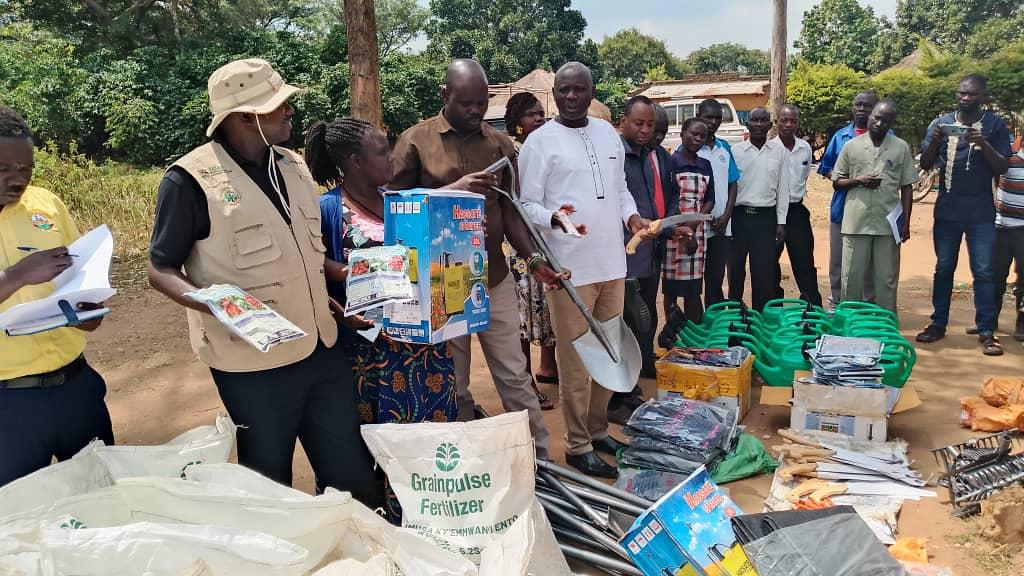
Zombo district leaders hands over the inputs to farmers of Udoku mit youth group in Areju East Village , Abeju Parish, Nyapea Sub County.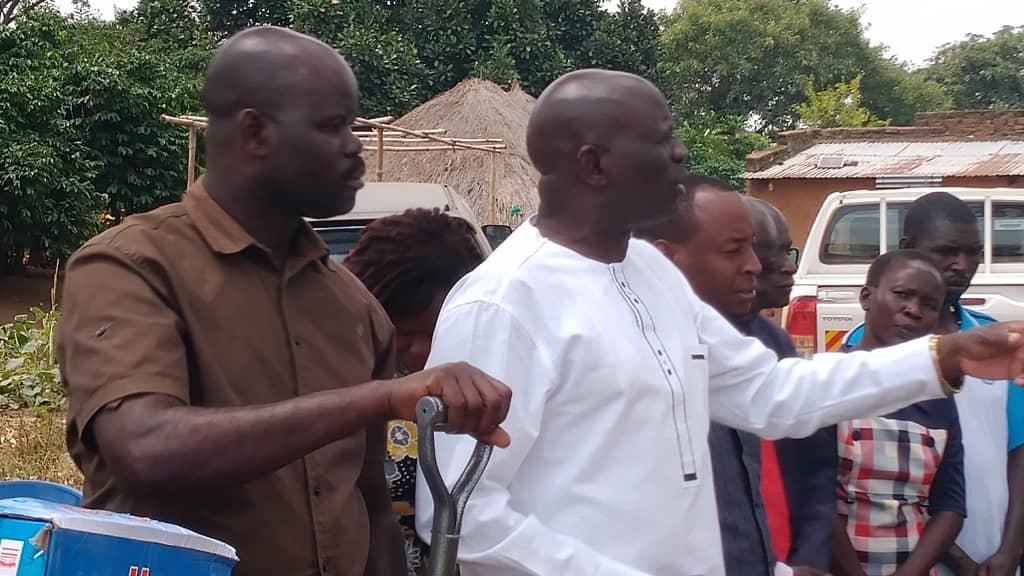
Leaders during the engagement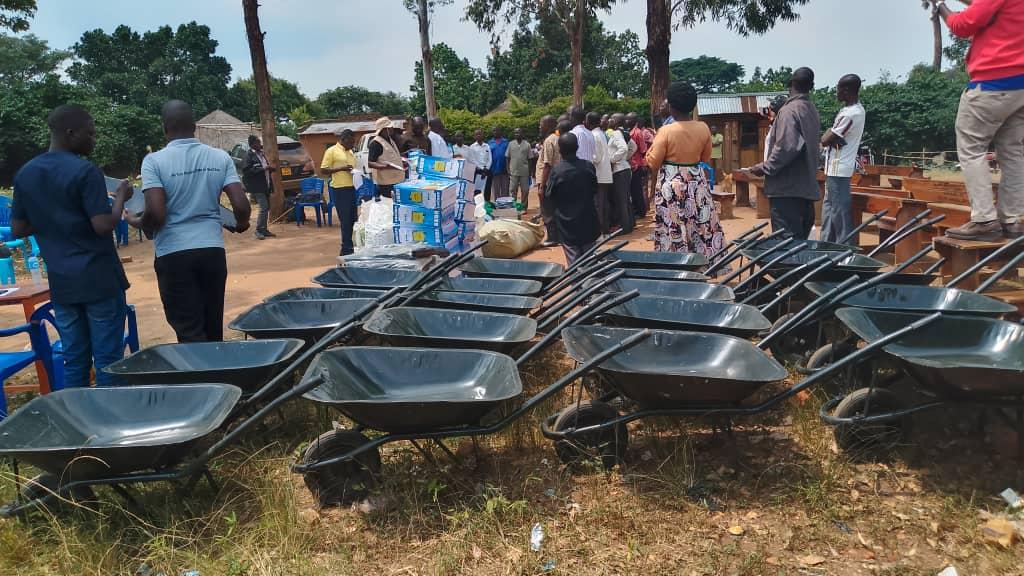
Some of the inputs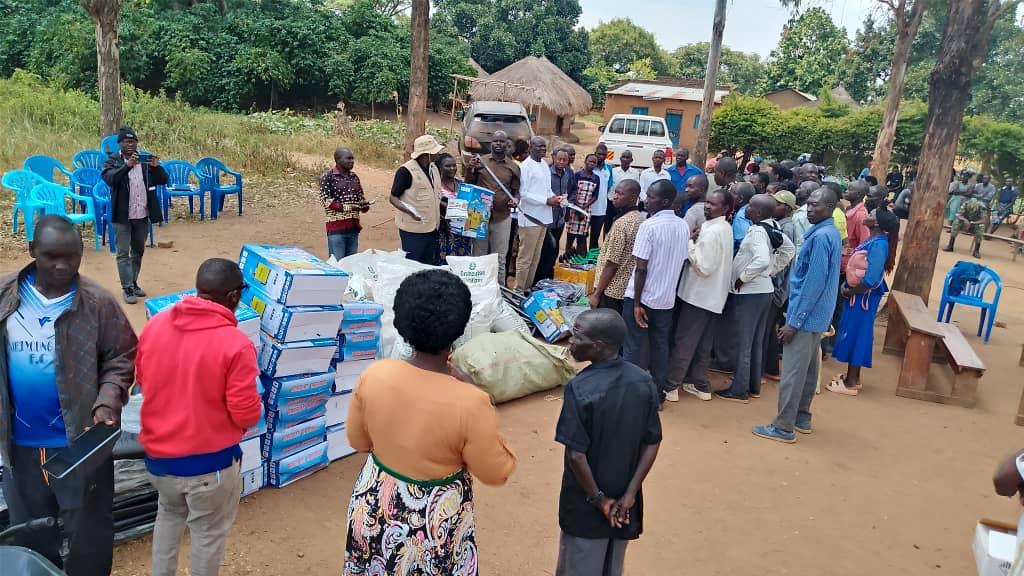
Farmers receive inputs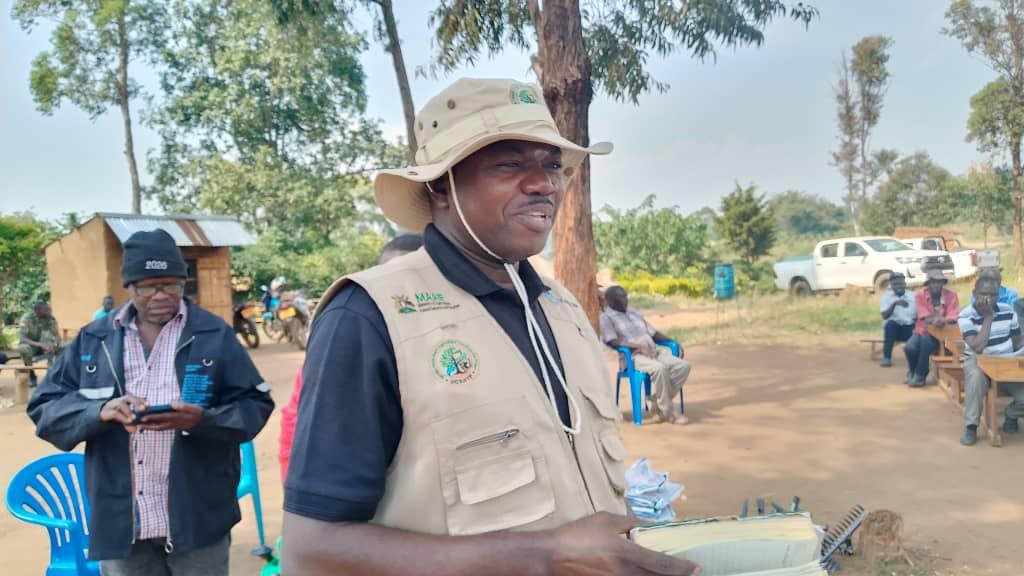
District Production officer Dr. Walter Kumakech
Mike Rwothomio is news editor at Zoomer Africa your number one grassroot information hub for African news trends and updates.



 English
 French
