


 About Us
 الشروط
 الخصوصية
 Community Guidelines
Healing, Hope and Restoration: Why Uganda Must Embrace Second-Chance Education for Teenage Mothers
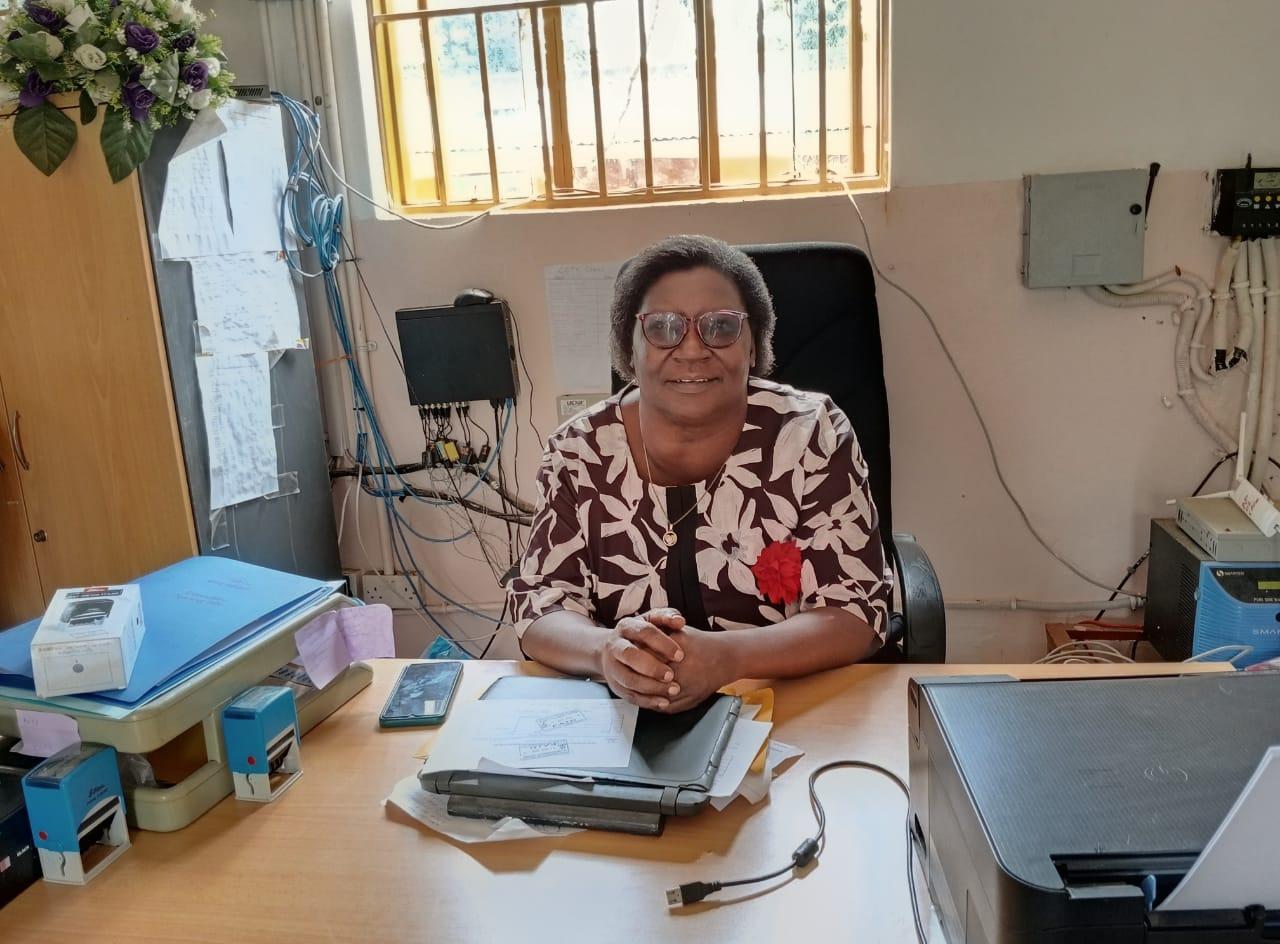
By Dr. Betty Udongo Pacutho, PhD
Nebbi, Uganda — “I thought my life had ended when I became pregnant.”
I have heard that sentence dozens of times from girls who come to our centre.
They are 15, 17, 19 years old. They had dreams of becoming nurses, teachers, businesswomen. Then pregnancy came, and with it, silence. Shame. Rejection. School doors closed.
But I have also seen what happens next when a girl is given a second chance. Her head lifts. She begins to believe in herself again. She learns to hold her baby and hold a book.
That transformation is why at New Generation Healing and Empowerment Centre, we say we are about “Trauma Healing and Hope Restored.” It has convinced me that pregnancy should never become a life sentence of poverty and exclusion.
Why do girls really drop out?
We blame pregnancy. But pregnancy is often the visible outcome of a deeper problem.
From our work, poverty and lack of family support before and after delivery are the main reasons girls leave school permanently.
When families cannot provide school fees, pads, cosmetics, or even food for a teenage girl who has reached sexual maturity, some man or boy out there is willing to provide it. Those gifts are not free. The girls have to pay in their “own currency.” The result is pregnancy.
It is not always pregnancy that causes dropout. Sometimes dropout causes pregnancy — because the girl is already out of school with nothing to do.
We also cannot ignore the lack of sexuality education. Some girls have told us they got pregnant after their first sexual encounter. They did not know what was happening. Some were under the influence of alcohol or drugs.
And after delivery, four questions keep them out of school: Who will look after my baby? Who will pay my school fees? Will people laugh at me? Will the school accept me?
Many want to return. But without support, returning is almost impossible.
We are not just losing a girl. We are losing two generations
When we focus only on the mother, we forget her child.
A mother with no education or skills has very limited opportunity to earn a decent income. That affects her child’s nutrition, healthcare, education and overall development. We create a cycle where one generation’s disadvantage becomes the next generation’s disadvantage.
That is why our model at New Generation is different. Under our Economic Empowerment Program, we give the girls work at the centre and on the farm so they earn money to support themselves and their children without expecting it from a man. We teach better parenting so they can support their children’s education.
When you educate a young mother, you invest in her child and break that cycle.
What second-chance education really means
Second-chance education should not mean forcing a young mother back into a conventional classroom with teenagers who will mock her.
It should meet her where she is.
At New Generation, we combine accelerated learning, vocational and entrepreneurship skills, parenting, emotional and spiritual support, and opportunities to transition into formal education or employment. We have seen it work. Girls regain confidence and move forward.
My passion for this began with my own life.
My father used to tell me: _“Your education is your first husband, these other husbands are temporary. Your certificate will never leave or forsake you.”_ Those words stuck in my head and shaped my future.
I purposed to focus on my education and never entertain boyfriends. I met my husband, Rev. Canon Albert Festus Udongo, when I was in Senior Five at Gayaza High School. He was a Sunday School teacher at our church in Bugolobi. When he presented his manifesto, I asked him if he was willing to be my “second husband” after education and promise not to interfere with my studies.
He said yes. I told him I would consider his manifesto after I joined the University.
What helped us during courtship was that we were both Born Again Christians and we purposed to remain pure. We thank God who honored our desire.
He waited four years. We got married after my first year at university. I had my first born during my final year. That is how I got interested in second-chance education — because I realized pregnancy was not a sickness nor the end of life. It does not affect your intellectual ability. One can study like a normal student, especially if there are no complications and you have family support.
So my undergraduate research project was on _“Second Chance Education for Teenage Mothers”_ — documenting success stories at a centre in Ilala, Dar-es-Salaam. Later, when thousands of girls got pregnant during the COVID-19 lockdown and could not go back to school, I started New Generation Healing and Empowerment Centre. Those COVID babies are our NEW GENERATION.
Our message to them is simple: Your education may have been interrupted, but your future is secured.
This is a cause I have championed internationally. My paper, _“Second Chance Education for Teen Mothers in Science and Technology,”_ was presented at the 8th International Gender and Science and Technology Conference (GASAT 8) in Ahmedabad, India, from January 5–10, 1996.
What does Uganda lose?
We lose human capital.
These young mothers could become teachers, nurses, entrepreneurs, farmers, professionals and leaders. Without education, many remain trapped in poverty and dependency.
We lose economically because we leave a large group of young people outside productive employment. Socially, we face continued poverty, dependency and another cycle of teenage pregnancy.
Investing in young mothers is not charity. It is an investment in Uganda’s human capital.
If I met the Minister of Education, I would ask for a clear and adequately supported national pathway for young mothers to return to education, including flexible learning and childcare support.
To donors, I would ask to invest in second-chance education as a long-term program, not short-term projects. In my Doctoral Dissertation — _Science Education Policy in Emergency, Conflict and Post Conflict Situation: A Critical Analysis of Science Education Program in Uganda_ — I recommend that EDUCATION should be included as EMERGENCY RELIEF AID together with food, water, shelter and clothing during crisis, not as a post-crisis afterthought. Support must cover formal education, childcare, early childhood education, vocational training, psychosocial support and livelihoods.
To civil society, I would ask: Help communities change the narrative from “she got pregnant, so she has failed” to “she is a young mother who deserves another opportunity.”
To the girl who thinks it’s over
If you are reading this and you think your dream of becoming a nurse or teacher is over because you have a child, listen to me:
Your child has changed your circumstances, but your child has not cancelled your dream.
Do not allow one mistake, one pregnancy or what people say about you to define the rest of your life. You can still become what you dreamed of becoming.
Your journey may be different from what you originally planned, but different does not mean impossible. Get up, seek help, go back to learning and keep moving forward. Your child can grow up seeing you as a role model of courage and determination.
Is it expensive?
Yes, it is expensive to run second-chance education because you have to support both the girl and the child. We need teachers, materials, vocational equipment, childcare, food, counselling, transport and safe accommodation for some of the most vulnerable.
But it is much more expensive NOT to invest. As the saying goes, if you think education is expensive, try poverty.
That is why we don’t focus on numbers, but on the few individuals who can become Change Agents in their families and communities.
The question should not be, “Can we afford second-chance education?” The question should be, “Can Uganda afford to lose this generation of young mothers and their children?”
When one young mother succeeds, she sends a message: _“Your circumstances do not have to determine your destiny.”_
My life slogan is 3Ds: Determination Determines Destination. In Gayaza High School our motto was “NEVER GIVE UP.” I decided to GIVE UP ON GIVING UP. That means giving up is not an option. I always say, it got to work — how I don’t know — but I will keep trying until it happens.
A shared responsibility
The responsibility cannot be on the girl alone. Families should support rather than shame her. Men who father these children should take responsibility. Communities should stop stigmatizing.
At New Generation, we are intentional about Family Restoration. We try to reconnect babies with their fathers. Where possible we encourage proper marriage so babies grow in stable homes. There are too many single parents in our community, and single parenting contributes to teen pregnancy because boys and girls lack stable family role models to emulate. There seems to be a generation curse of single motherhood.
When we had jobs at our construction site, we gave priority to the fathers of our children so they can earn and support their babies. We have employed some “baby daddies” permanently. We even organized a wedding for one of our first beneficiaries.
One girl at a time
We believe every young mother deserves a second chance. But we cannot do this alone. We need families, government, donors, churches, the private sector and well-wishers.
When you give a young mother a second chance, you are not changing one life. You are changing the future of her child, her family and her community.
Pregnancy should not become a life sentence of poverty and exclusion.
I will end with the story of the starfish.
A young person was walking along a beach covered with thousands of starfish washed ashore. One by one, he picked them up and threw them back into the sea. Someone watching said, “Why bother? There are thousands. You cannot possibly make a difference.” He picked up another starfish, returned it to the water and said, “It made a difference to that one.”
That is our work at New Generation. We may not reach every young mother in Uganda, and we may not have all resources. But for the one young mother who is given another opportunity to learn, to heal, to acquire skills and to dream again, that opportunity can change her entire life.
Success should not only be measured by the number of girls we reach, but by lives transformed — the girl who once believed her future was over but begins to dream again; the young mother who becomes economically independent; the child who grows up with more hope because his mother was given a second chance.
Every young mother matters. Every dream matters. Every second chance matters.
Let us give our young mothers a second chance not simply to go back to school, but to believe again that they have a future worth pursuing.
Because sometimes, changing the world begins with saving one starfish at a time.
Dr. Betty Udongo Pacutho is a science educator, researcher, former Member of Parliament, and founder of New Generation Healing and Empowerment Centre.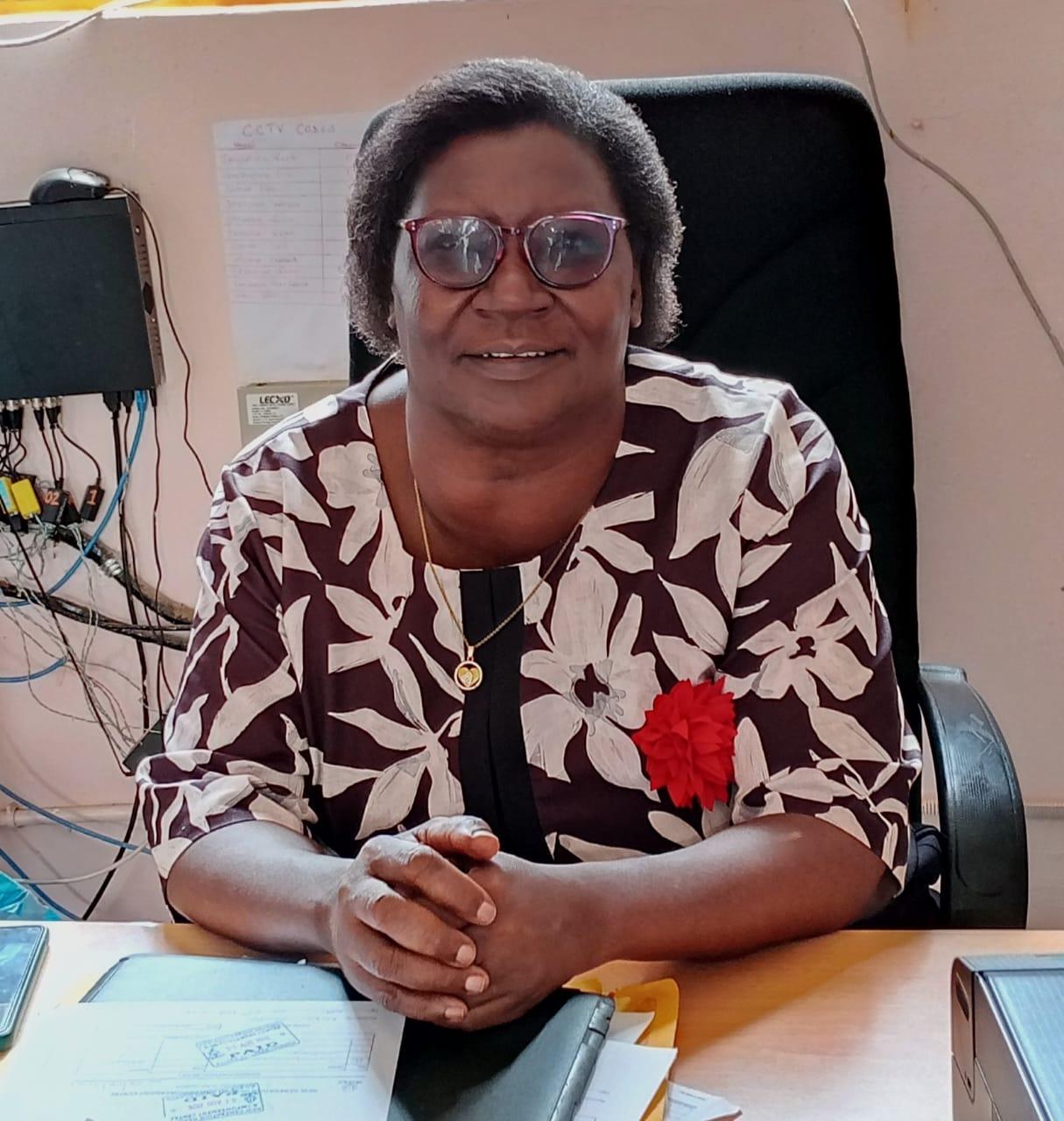
Dr. Betty Udongo Pacutho is a science educator, researcher, former Member of Parliament, and founder of New Generation Healing and Empowerment Centre.
Edited by Zoomer Africa ediorial, Zoomer Africa, your number one grassroot infomation hub for African news, trends and updates.



 English
 French
