


 About Us
 Terms
Terms
 Privacy
 Community Guidelines
What If West Nile's Breakthrough Is Not More Money, But More Togetherness?
OPINION
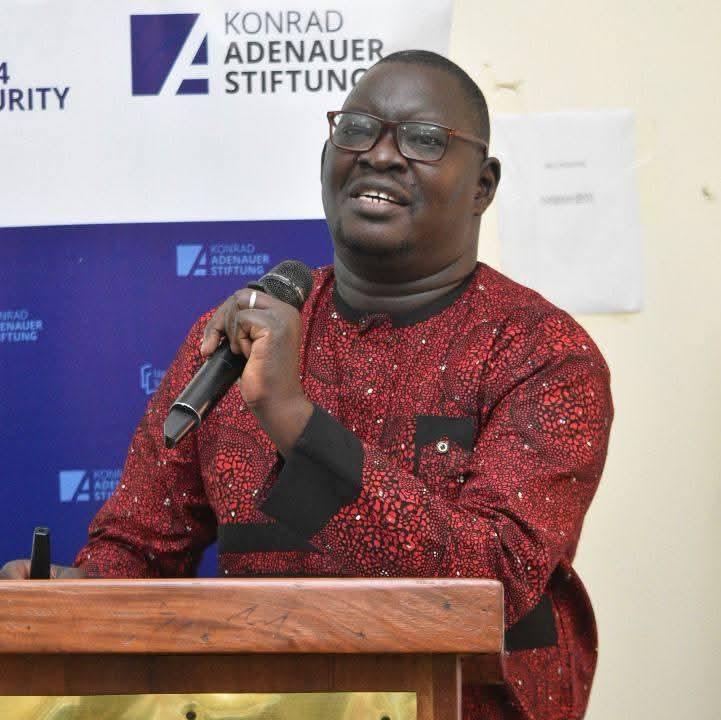
By Moses Akuma Odims
West Nile stands at an interesting moment.
We are more than four million people — resilient, diverse, hardworking — hosting both nationals and refugees. We have fertile soils, we border three countries, we have the Albert Nile, we have tourism potential, we have growing power supply and we have Muni University.
Yet the numbers still worry us. About 1.3 million people — nearly four in ten — still live in multidimensional poverty. Literacy is at 59%, among the lowest nationally. Many of our young people still feel they must leave for Kampala to find opportunity.
This raises a gentle but important question: With all this potential, what more could we unlock if we worked together more deliberately?
Perhaps the next step is how we work together
Much of the effort in West Nile has been well-intentioned but fragmented. Districts naturally advocate for their own allocations. Political energy sometimes goes into short-term needs rather than long-term regional strategy. Cultural and faith institutions, private sector and technical teams all work hard, but often on parallel tracks.
One wonders what would happen if these tracks converged more often. What if a bountiful mango harvest in Yumbe found its juice processor in Arua without hurdles? What if groundnuts from Zombo, shea from Nebbi and simsim from Madi-Okollo fed into one shared value chain that we all owned?
We have tried waiting for development to come from elsewhere. Perhaps it is time to consider building it more strongly from within, together.
An invitation to collaborative stewardship
Maybe what West Nile needs now is what some call collaborative and cross-boundary stewardship — a simple habit of leaders choosing to solve problems together that no one can solve alone.
It could look like this:
1.One economic space. Rather than twelve separate economies, we could begin to see ourselves as one. A coordinated approach to feeder roads, irrigation along our rivers, regional seed banks, storage and joint marketing could make a farmer in Zombo and a trader in Koboko part of the same system.
2.Platforms that deliver. We already have promising platforms — WENDA, the West Nile Diaspora Association, the Cultural Leaders Forum, the Inter-Religious Council. One suggestion is that these platforms move from resolutions to a few concrete, jointly-funded priorities — for example, making at least two industrial parks in Nebbi, Yumbe, Madi-Okollo or Koboko operational.
3.People as partners. Programmes like PDM and Emyooga might achieve more if farmers, traders, youth and women are involved as co-creators, not just beneficiaries. Local knowledge is an asset.
4.The university and private sector at the centre. What if Muni University, cultural institutions and business leaders were invited to co-lead the regional knowledge system — extension, vocational skills and value addition for crops like coffee, cocoa, rice, cassava and shea?
Thinking beyond our administrative lines
Poverty does not stop at a district border. Perhaps leadership should not either.
We could think at three levels:
Within West Nile — planning together so that infrastructure benefits several districts at once.
With the centre and neighbouring regions — speaking with one voice to negotiate fairly, while showing results that justify more investment.
Across international borders — embracing our gateway advantage. Improved border posts at Vurra, Oraba and Lia, bonded warehouses, formalised cross-border trade, and tourism circuits linking us to Murchison and beyond could turn location into prosperity. Even our experience hosting refugees, if managed as partnership, expands local markets and enterprise.
And as we think across boundaries, we might also need to cross generational and gender boundaries. With more than half our population under 18, securing land rights for women and linking youth skilling to real market demand may no longer be social projects, but economic imperatives.
Five gentle suggestions for where we could start
If there is appetite for a different way of leading, perhaps we could consider:
1. Crafting one simple West Nile Regional Development Plan with measurable targets — owned jointly by political, technical, cultural and private actors.
2. Turning industrial park land into working clusters through dedicated, non-partisan investor facilitation.
3. Prioritising infrastructure as a regional public good, with transparent joint monitoring.
4. Rebuilding agricultural extension and vocational training as a shared effort.
5. Modelling long-term thinking — gradually shifting more public resources from consumption to productive investment.
West Nile has already shown what is possible — peaceful coexistence, agricultural resilience, recent gains in power and roads. The people have the energy and the assets.
Perhaps the missing piece is not more resources, but more bridges between us.
If we choose to step across the boundaries that have quietly held us back — district, party, tribe, sector — we might just rewrite the story from a region often described by its poverty, to a region known as a producer, a trader, and a partner.
That choice is available to us. Together, we could open a new page.
Moses Akuma Odims is the Executive Secretary of the West Nile Development Association (WENDA).
Zoomer Africa your number one grassroot information hub for African news trends and updates.



 Arabic
 French
