


 About Us
 Conditions générale de vente
 Confidentialité
 Community Guidelines
How to Distribute a Press Release: A Guide to Process, Planning, and Cost
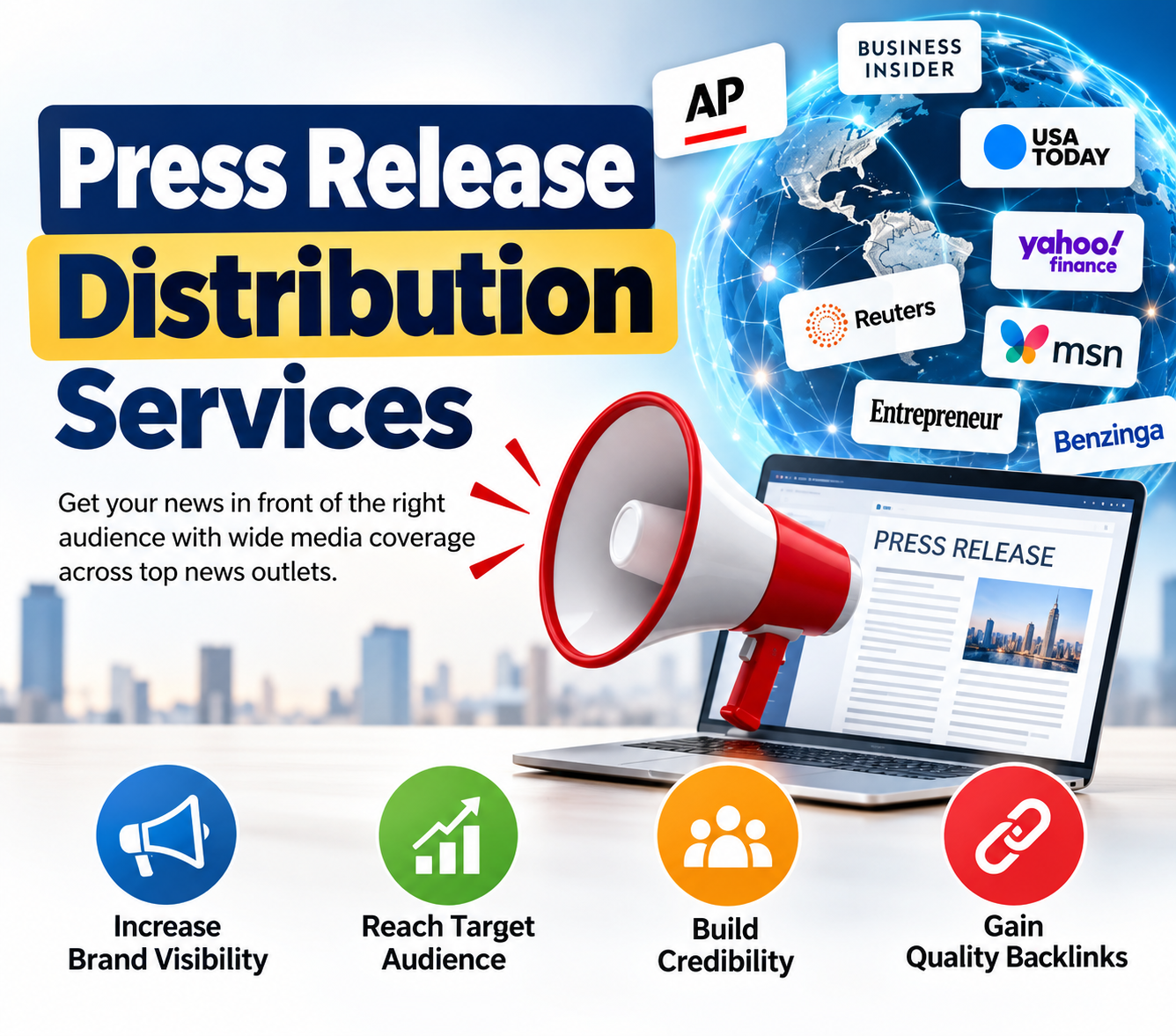
Distributing a press release is an important step in sharing company news with journalists, industry publications, online audiences, and other relevant stakeholders. However, publishing an announcement is only part of the process. Businesses also need to identify suitable distribution channels, prepare their content carefully, and understand the costs involved.
For startups, small businesses, and established organizations in the United States, an effective distribution strategy begins with a clear purpose and a realistic understanding of available options. Knowing how to distribute a press release can help organizations communicate important updates, improve brand visibility, and make informed decisions about their public relations budgets.
This guide explains the main distribution methods, the steps involved, and the factors that influence press release cost.
What Does Press Release Distribution Mean?
Press release distribution is the process of sharing an official company announcement with selected media outlets, journalists, news distribution networks, industry websites, or other audiences.
Businesses use press releases to communicate developments such as product launches, executive appointments, company expansions, research findings, partnerships, funding announcements, and community initiatives.
Distribution methods vary depending on the announcement's purpose. A local business might contact regional journalists, while a technology company introducing a product to a nationwide audience may consider a broader distribution network.
It is important to understand that distribution does not guarantee media coverage. A press release can be published or delivered through a distribution service without receiving independent editorial attention. Journalists and editors decide whether a story meets their publication's standards and audience interests.
Step 1: Define the Purpose of Your Announcement
Before selecting a distribution channel, determine what the announcement needs to communicate and who should receive it.
A clear objective makes it easier to select relevant media contacts, choose an appropriate distribution method, and measure the results.
Common objectives include:
-
Announcing a new product or service.
-
Sharing company milestones or business expansions.
-
Communicating executive appointments.
-
Reporting research findings or industry developments.
-
Announcing partnerships, investments, or acquisitions.
-
Providing updates about community programs or events.
For example, a small business opening a new location may benefit most from regional media coverage. A company announcing a national partnership may need a broader audience.
The announcement should also provide genuine news value. Routine promotional messages, unsupported claims, and overly sales-focused language are less likely to attract editorial interest.
Step 2: Prepare a Newsworthy Press Release
Strong distribution begins with well-prepared content. Even a broad distribution network cannot compensate for an unclear, inaccurate, or poorly structured announcement.
A professional press release generally includes the following elements.
A clear headline: Explain the main development in a concise and factual way.
A strong opening paragraph: Answer the essential questions: who, what, when, where, why, and how, as relevant to the announcement.
Supporting details: Include useful background, relevant figures, dates, and explanations that help readers understand the news.
A credible quotation: Add a meaningful comment from an authorized company representative when appropriate. The quotation should provide context rather than repeat the headline.
Company background: Include a short description of the organization, often called a boilerplate.
Media contact information: Provide an appropriate contact name, email address, or telephone number for follow-up questions.
Before distribution, verify all names, dates, figures, quotations, and links. Confirm that the company has permission to share any included images or other media assets.
Businesses should also avoid exaggerated claims and ensure that statements about products, performance, or results can be substantiated.
Step 3: Choose the Right Distribution Method
There is no single distribution method that works for every announcement. The right approach depends on the target audience, available budget, industry, geographic reach, and news value.
Direct media outreach
Direct outreach involves identifying relevant journalists, editors, or producers and sending them a tailored pitch with the press release.
This approach can be useful when an announcement is particularly relevant to a specific publication, local community, or industry beat. Research is essential: a journalist who regularly covers healthcare technology, for example, may be a better contact for a medical software announcement than a general lifestyle reporter.
Personalized communication is generally more effective than sending identical messages to large lists of unrelated contacts. Businesses should follow each publication's submission guidelines and respect journalists' preferences.
Press release distribution services
Distribution services provide a structured way to submit announcements to selected networks, media outlets, or online publication channels. Available features differ by provider and package.
Some services offer geographic targeting, industry categories, multimedia options, reporting dashboards, or additional editorial support.
Before choosing a provider, businesses should examine where releases may appear, whether distribution includes direct journalist delivery or online publication, and what reporting is provided.
For example, Vertex Newswire provides a point of reference for businesses researching press release distribution options. As with any provider, companies should review the current service details and package terms to determine whether they fit their communication objectives.
Company newsrooms and owned channels
Organizations can also publish announcements in their own online newsroom and share them through email newsletters, corporate blogs, and social media accounts.
Owned channels give businesses greater control over presentation and access to their existing audiences. However, publishing a release on a company website is different from distributing it to independent media outlets.
These methods can complement external distribution, especially when a business wants customers, partners, employees, or investors to access the announcement directly.
Industry and local publications
Some announcements are more relevant to specialized or regional audiences than to a general national audience.
Industry publications may be appropriate for technical developments, professional research, or sector-specific partnerships. Local newspapers, community websites, and regional business publications may be more suitable for store openings, local hiring initiatives, or community projects.
Selecting relevant outlets can help reduce unnecessary distribution expenses and make the announcement more useful to its intended readers.
Step 4: Understand Press Release Cost
Press release cost varies according to the distribution method, geographic coverage, provider, editorial support, and additional services included in a package.
A business should compare what each option delivers rather than choosing solely on the basis of its advertised price.
The following are broad planning ranges in US dollars, not verified live quotes. Actual prices vary by provider and may change over time.
| Distribution option | Illustrative cost range | Common considerations |
|---|---|---|
| Direct outreach | $0 in distribution fees when handled internally | Staff time, research, and writing |
| Basic online distribution | $50–$300 | Network reach and publication terms |
| Broader or targeted distribution | $200–$800+ | Geographic or industry targeting |
| Major national wire distribution | $500–$2,000+ | Network, word count, and selected options |
| Professional writing support | $100–$1,000+ | Research, complexity, and revisions |
These ranges overlap and should not be treated as universal market rates. Some providers charge outside these ranges, and some packages combine writing, distribution, and reporting.
Factors that influence the cost
Geographic coverage: Local, regional, national, and international distribution packages may have different pricing structures. Wider reach can increase costs, but broader coverage is not automatically more valuable.
Distribution network: Providers differ in their relationships with media outlets, delivery channels, and online publication networks. Businesses should determine exactly what a package includes.
Word count: Some services price releases by word count, while others include a standard length and charge extra for longer announcements.
Writing and editing: Professional writing, fact-checking, editing, and formatting may be included or billed separately.
Multimedia options: Photographs, videos, logos, and other assets may involve additional fees or technical requirements.
Targeting and timing: Specialized industry targeting, geographic selection, and expedited handling can affect the total price.
Reporting and analytics: Some packages provide delivery reports, links to published pages, or performance metrics. Businesses should check which measurements are included and what they actually represent.
Step 5: Compare Providers Before Purchasing
Comparing distribution providers helps organizations understand the value of each package and avoid paying for features they do not need.
Before making a decision, ask these questions:
-
Which outlets, networks, or channels are included?
-
Is the service focused on online publication, journalist delivery, or both?
-
Are geographic and industry targeting available?
-
Are writing, editing, and multimedia included?
-
Are there extra charges for word count, images, or revisions?
-
What reports are provided after distribution?
-
Are refund, cancellation, or correction policies clearly stated?
Businesses researching options, including Vertex Newswire, should evaluate providers against the same criteria. This makes comparisons more meaningful than relying on broad promises about reach or visibility.
It is also useful to distinguish between distribution, publication, and editorial coverage. A report showing that a release was distributed or appeared online does not necessarily mean that journalists independently covered the announcement or that a specific number of people read it.
Step 6: Submit and Schedule the Announcement
Once the content and distribution channel are ready, review the submission requirements carefully.
Check the release for spelling, formatting, factual accuracy, working links, and appropriate contact details. Make sure any embargo, publication date, or time-sensitive information is clearly communicated and agreed upon with the relevant parties.
For announcements tied to a product launch, conference, financial update, or company event, coordinate distribution with the broader communication schedule.
Avoid scheduling a release before the organization is ready to respond to questions. Relevant team members should know what is being announced and who is authorized to provide additional information.
After submission, retain a copy of the final release and the package details. These records can help when reviewing results or correcting any inaccuracies.
Step 7: Measure the Results
Distribution is not the final step. Businesses should review the results to understand whether the announcement reached its intended audience and supported its original purpose.
Useful indicators may include:
-
Confirmed distribution or delivery records.
-
Relevant online publication links.
-
Independent media mentions and interviews.
-
Referral traffic to the company website.
-
Engagement with the announcement through owned channels.
-
Qualified inquiries or other outcomes connected to the news.
Interpret these metrics carefully. A high number of potential recipients does not necessarily equal readership, and an online placement does not automatically produce meaningful traffic or search ranking improvements.
Search engines use many factors to evaluate pages and links. Businesses should not assume that distributing a press release will guarantee backlinks, improve rankings, or generate a specific amount of traffic.
The most useful evaluation combines measurable outcomes with the quality and relevance of the coverage received.
Common Mistakes to Avoid
Several mistakes can reduce the effectiveness of a press release distribution campaign.
Choosing reach over relevance: A large distribution list may include outlets that have little interest in the announcement.
Using overly promotional language: Press releases should communicate verifiable news rather than read like advertisements.
Ignoring audience needs: Journalists and readers need clear information about why the development matters.
Overlooking additional costs: A low starting price may exclude editing, multimedia, targeting, or other desired features.
Expecting guaranteed coverage: Distribution services can deliver content through specified channels, but independent editorial decisions remain outside a company's control.
Failing to measure outcomes: Without reviewing the results, businesses may repeat an approach that does not support their goals.
Avoiding these mistakes makes the process more focused, transparent, and easier to evaluate.
Conclusion
Learning how to distribute a press release involves more than selecting a service and submitting a document. Businesses need a newsworthy announcement, a clearly defined audience, an appropriate distribution method, and a realistic budget.
Press release cost depends on factors such as geographic coverage, distribution networks, writing support, multimedia, and reporting. Comparing providers carefully can help organizations choose services that match their needs without paying for unnecessary features.
Whether a company uses direct media outreach, specialized publications, an online distribution service, or a combination of channels, the objective should remain the same: communicate accurate and relevant news to the people most likely to value it.
With careful planning, businesses can make better distribution decisions, evaluate outcomes responsibly, and develop a more consistent approach to public relations.


 English
 Arabic
