

Rwanda and DR Congo: Why the Washington Peace Deal Is Struggling to Deliver Peace

By Zoomer Congo News Desk | 20 November 2026
A peace agreement facing its biggest test
The diplomatic effort to restore peace between Rwanda and the Democratic Republic of the Congo (DRC) is facing significant challenges, raising fresh questions about whether international negotiations can finally end years of violence in eastern Congo.
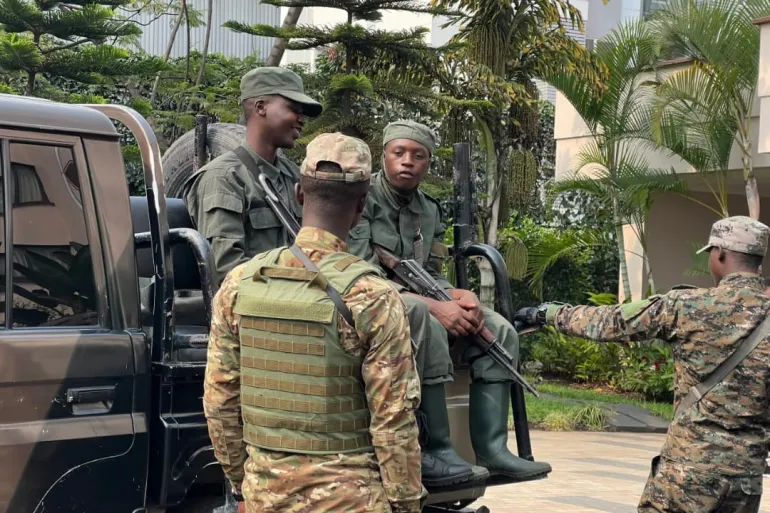
Despite the Washington Accords for Peace and Prosperity, the two neighbouring countries remain divided over critical security commitments. The disagreement centres on the presence of armed groups in eastern DRC, Rwanda's military involvement and the conditions each government believes must be fulfilled before it can implement its obligations.
A new round of discussions was reportedly expected in Geneva, Switzerland, on November 19, as diplomatic efforts continued to find common ground. However, the meeting had not been independently confirmed in reporting available at the time of publication.
The situation illustrates a persistent problem in the Great Lakes region: political agreements can establish a framework for peace, but implementing them requires trust, accountability and genuine cooperation between the parties.
The FDLR dispute: Two governments, different interpretations
At the centre of the disagreement is the Democratic Forces for the Liberation of Rwanda (FDLR), an armed group operating in eastern DRC with historical roots in the aftermath of the 1994 genocide against the Tutsi in Rwanda.
Kigali considers the continued presence of the FDLR a serious national security threat. Rwanda argues that the group must be neutralised before it can fully withdraw its forces and lift the defensive measures it maintains along the Congolese border.
Kinshasa, meanwhile, maintains that it is taking steps to disarm and demobilise FDLR fighters.
In July 2026, the Congolese government announced an arrangement with a faction of the FDLR covering disarmament, demobilisation and cantonment. Kinshasa presented this as progress towards fulfilling its obligations.
Rwanda rejected the arrangement, arguing that an agreement with one faction does not demonstrate that the wider organisation has been dismantled.
This disagreement has created a diplomatic stalemate. Both governments point to the other side's outstanding responsibilities, while the mechanisms intended to monitor implementation continue to face difficulties establishing measurable progress.
Rwanda's military role and growing international pressure
Rwanda's military involvement in eastern DRC remains another major source of tension.
The United States has repeatedly called for the implementation of the Washington agreements and an end to external military support for armed groups operating in Congo.
On October 28, 2026, Washington imposed sanctions on Rwanda's Ministry of Defence and Zigama Credit and Savings Society. The US Treasury accused Rwanda's military establishment of supporting M23 operations in eastern Congo through military deployments, equipment and logistical assistance.
Rwanda rejected the allegations and maintained that its security concerns, particularly the continued presence of the FDLR, must also be addressed.
The sanctions represent a significant escalation in Washington's efforts to pressure the parties into implementing their commitments.
However, sanctions and diplomatic pressure alone cannot guarantee peace. Their effectiveness will ultimately depend on whether they produce verifiable changes in military conduct and improve security for civilians.
The M23 conflict: A separate but connected peace process
Another complication is the continued conflict involving the M23 armed movement in eastern DRC.
While the Washington Accords primarily address security commitments between the Congolese and Rwandan governments, negotiations involving Kinshasa and M23 are being pursued through a separate diplomatic process facilitated by Qatar in Doha.
The two processes are different, but closely connected.
The Doha negotiations seek to address issues including ceasefire monitoring, humanitarian access, disarmament, security arrangements and the restoration of state authority.
The emergence of the Front for the Refoundation of the Nation (FRN) in October 2026 has also introduced a new political dimension. The movement announced that it would assume the political and organisational responsibilities of the former Congo River Alliance (AFC) structure.
This development raises further questions about representation, accountability and which political and military actors will be responsible for implementing commitments made through the Doha process.
Ultimately, an agreement between Kigali and Kinshasa cannot independently resolve the entire conflict if armed groups operating inside Congo remain outside an effective and enforceable settlement.
America's strategic interests and Congo's mineral wealth
Beyond security, the Washington process also has an economic dimension.
The United States and the DRC signed a strategic partnership on December 4, 2025, intended to expand cooperation in critical minerals, mining and infrastructure.
The DRC possesses substantial reserves of valuable minerals, including cobalt and copper, which are essential to global industries such as electric vehicle manufacturing, renewable energy and advanced technology.
Washington has an interest in strengthening access to these resources and diversifying its critical mineral supply chains.
For Congo, the partnership presents an opportunity to attract investment, develop infrastructure and increase the economic value of its natural resources.
However, an important question remains: can economic cooperation become a foundation for lasting regional stability when insecurity continues to threaten communities and commercial activities?
The Congolese people should not have to choose between peace and the responsible development of their country's natural wealth. Both must advance together.
Why previous peace agreements have struggled
The current Washington process is not the first attempt to resolve tensions between Rwanda and the DRC.
Previous initiatives, including the 1999 Lusaka Ceasefire Agreement, the 2002 Pretoria Agreement, the 2007 Nairobi Communiqué and the 2013 Peace, Security and Cooperation Framework, all sought to address armed groups, regional security and territorial sovereignty.
Yet the persistence of armed groups and mutual distrust have repeatedly undermined these efforts.
The lesson is clear: agreements that lack effective monitoring, transparent implementation and meaningful consequences for violations risk becoming another collection of diplomatic commitments.
The current process has established mechanisms involving Rwanda, the DRC, the United States, Qatar, Togo and the African Union Commission. These structures are important, but their success must be measured by developments on the ground rather than the number of meetings held.
The human cost of delayed peace
Behind every diplomatic disagreement are communities that continue to experience insecurity, displacement and uncertainty.
Eastern Congo has endured decades of armed conflict, leaving families displaced, children exposed to disrupted education and communities struggling to access essential services.
For people living in affected areas, peace is not measured by international conferences or signed documents. It is measured by whether they can return home, cultivate their land, send their children to school and travel without fear.
The humanitarian consequences must remain central to every negotiation.
A sustainable settlement should guarantee safe humanitarian access, protect civilians, facilitate the voluntary return of displaced populations and refugees, and establish credible accountability for abuses committed during the conflict.
Zoomer Africa Analysis: Africa needs peace that can be measured
The Washington peace process presents an important opportunity for Africa's Great Lakes region, but its credibility depends on what happens beyond the negotiating table.
Rwanda has legitimate security concerns that must be addressed through verifiable regional arrangements. The DRC has an equally important right to territorial sovereignty and freedom from external military interference. Neither principle should be treated as optional.
The African Union and regional institutions must also play a stronger role in ensuring that African peace initiatives are not reduced to agreements negotiated and supervised primarily through external political interests.
The United States may provide diplomatic influence, economic incentives and sanctions, but lasting peace cannot be imported into the Great Lakes region. It must be built through commitments honoured by the countries directly involved and institutions trusted by the people they serve.
Equally important, Congo's mineral wealth must not become another reason for prolonged instability or competition over its territory.
Our position is straightforward: Peace must be demonstrated through action, not announcements.
Rwanda and the DRC must move beyond competing accusations and establish a clear, independently verifiable timetable for fulfilling their security commitments. Armed groups must be addressed, territorial sovereignty respected, and civilians protected.
The people of eastern Congo have waited too long for peace. Another diplomatic agreement without meaningful implementation would only deepen public disappointment.
Africa does not need another signature ceremony. It needs a peace process that delivers results.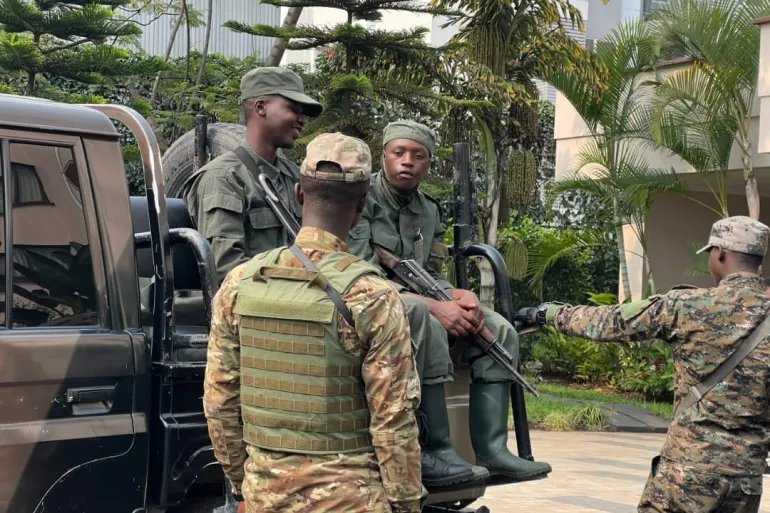
Years of conflict in eastern Democratic Republic of the Congo have left communities facing displacement, violence and uncertainty over the prospects for peace [Al Jazeera]
Zoomer Africa — Empowering Africans for African Unity. Download our app on Play store and app store be informed!!