


 About Us
 الشروط
 الخصوصية
 Community Guidelines
NARO Embark On Revamping Livestock Production Research Programs At Former Serere NaSARRI
By Alex Pithua
National Agricultural Research Organisation (NARO) has kickstarted the animal production research program at its National Semi-Arid Resources Research Institute (NaSARRI) in Serere District.
The ongoing livestock revamp at NaSARRI is being implemented under the auspices of the “Uganda Climate-Smart Agricultural Transformation Project (UCSATP)”, led by the Ministry of Agriculture, Animal Industry and Fisheries (MAAIF).
The project aims to restore productive assets, strengthen climate resilience, and transform agriculture in some of Uganda’s most vulnerable regions, Teso included.
According to Dr. Babigumira Brian, a Senior Research Scientist, Animal Breeder, Geneticist and Program Lead at NaSARRI, the ongoing revamp activities are firmly anchored in the government's broader plan to restock Teso and restore cattle production as a viable economic mainstay.
“Serere was historically a research hub for animal genetics and production in this region and played a critical role in supporting the beef industry. The revamping is meant to bring animals back as part of the restocking programme and to provide quality breeding stock for the entire sub-region,” Dr. Babigumira explains.
The first phase of restocking will see 230 heads of cattle introduced at NaSARRI, comprising Indigenous Zebu, Boran and Sahiwal breeds, which are well suited to the semi-arid conditions of Teso. Plans are already underway to introduce Jersey and Brahman cattle in subsequent phases, which will raise the total herd size to about 330 breeding animals.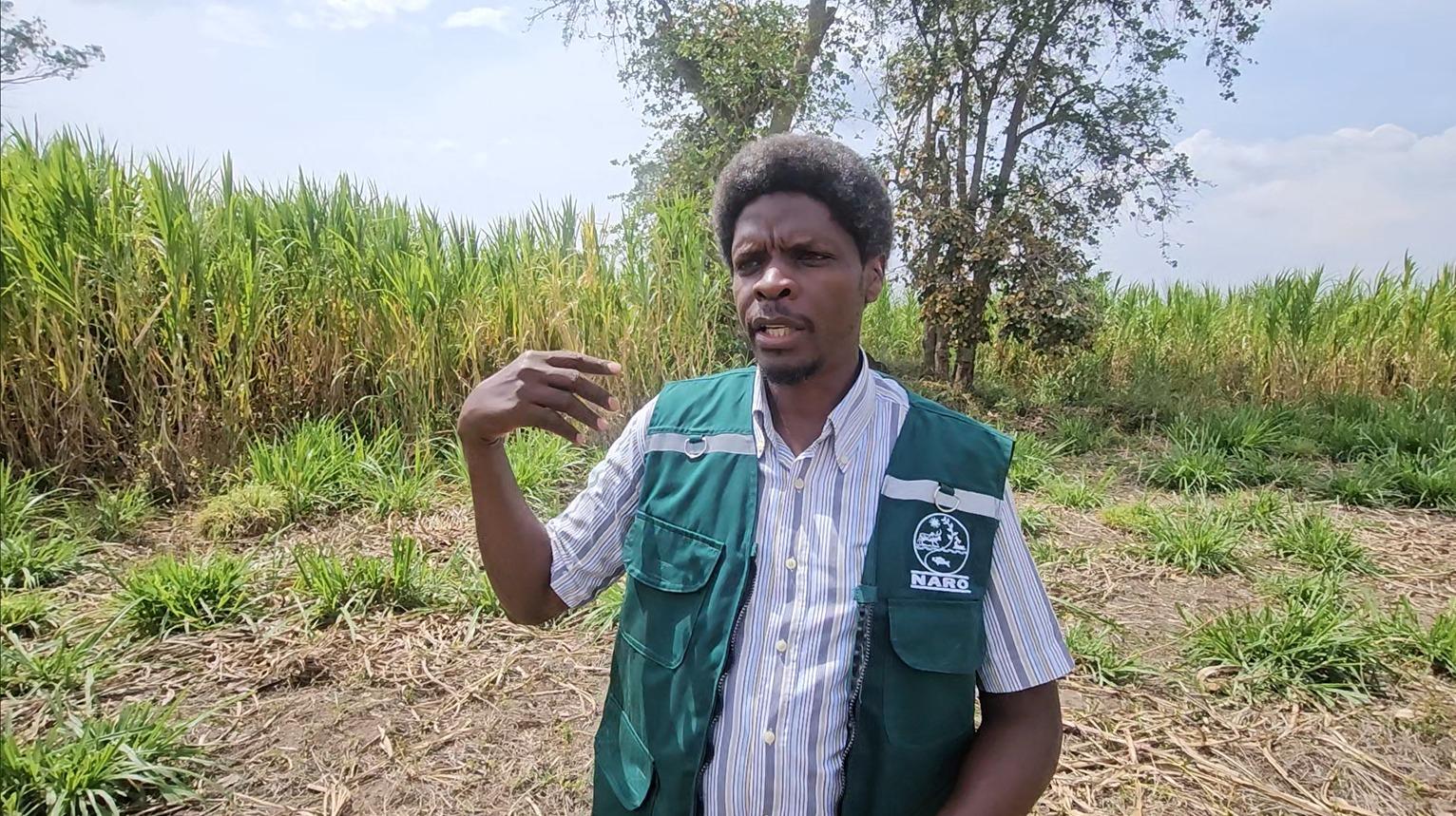
Dr. Babigumira Brian speaking from some of the pasture fields that have been established at the NARO institute in Serere. Photo by Alex Pithua
Frank Mugabi, Senior Communications Officer NARO confirmed the development.
“As you may know, Teso sub-region was a huge cattle-keeping zone years back. They even had a meat packers factory, which stands in ruins today.
However, cattle raids and insecurity wiped out almost all the animals here.
Now, the Government through the National Agricultural Research Organisation (NARO) working in collaboration with the Ministry of Agriculture, Animal Industry and Fisheries, have commenced activities to revive livestock farming in the region.
Several activities are underway at the NARO- National Semi-Arid Resources Research Institute in Serere district.” Mugabi explained in a sideline interview with our reporter
To support this restocking effort, major investments are being made in livestock infrastructure and land development.
The Ministry of Agriculture, Animal Industry and Fisheries (MAAIF) through its mechanization center, has provided heavy machinery including tractors, graders, ploughs and related equipment, enabling NARO to open up land for pasture establishment and construction of key livestock facilities is underway.
Dr. Babigumira said a rotational grazing system is being established to improve pasture utilisation and land productivity. Under this system, animals are confined to paddocks for short periods before being moved, allowing grazed areas optimal time to regenerate.
Pasture establishment as a mitigating component of the climate resilient rotational system.
NaSARRI is planting grass-legume mixed pastures, combining two grass species with three legumes to improve feed quality and soil fertility. Species such as Brachiaria and Desmodium are among the candidates being planted.
“We are working on paddocks and fencing, establishing firebreaks, and installing water reticulation systems with watering troughs,” he noted, adding: “These investments are critical for sustainable and climate-smart livestock production.”
NaSARRI is also rehabilitating key but long-neglected facilities that once supported beef production in the region. A pasture-based feedlot, which had completely deteriorated, will be restored to accommodate about 100 animals. Similarly, the meat evaluation unit that is essential for assessing carcass quality and supporting the beef value chain is slated for rehabilitation.
Other critical livestock management structures, including the dip tank and sprayrace, had fallen into disrepair.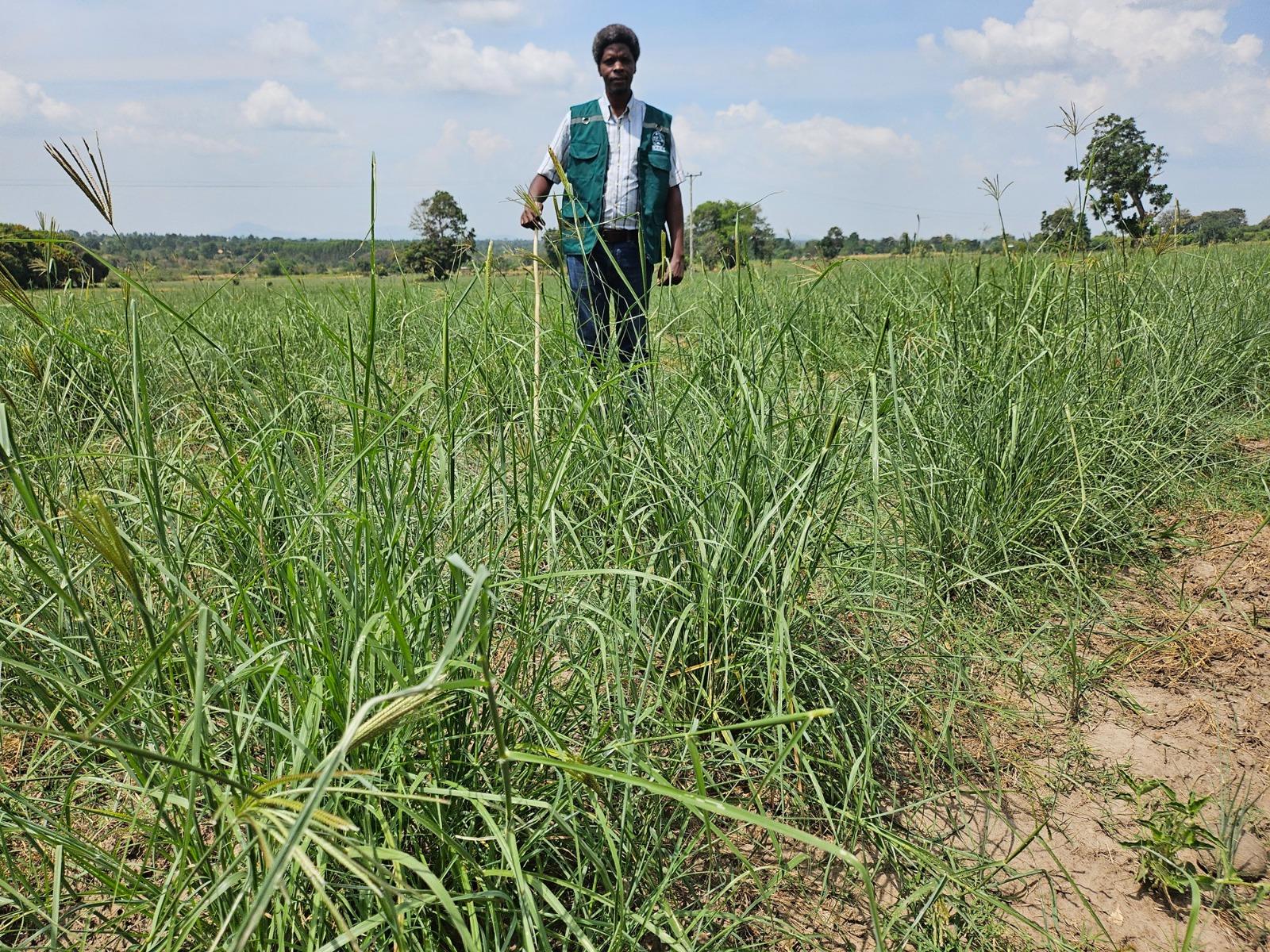
Dr. Babigumira Brian in a field of Chloris pasture established at the NARO institute in Serere. Photo by Alex Pithua
Revitalisation will begin with the sprayrace, which is vital for controlling ticks and diseases, especially among calves and pregnant animals. Plans are also in place to rebuild the dairy unit, including the construction of a new cattle shed, informed by benchmarking at NARO’s National Livestock Resources Research Institute (NaLIRRI) in Nakyesasa, Wakiso District. Supporting infrastructure such as a silo bunker and hay barn will also be constructed.
Recognising that feed scarcity is one of the biggest constraints faced by farmers, especially during the dry season, the project has placed strong emphasis on pasture seed production and farmer resilience. NaSARRI has established 55 acres of Chloris pasture for seed production, with seed already harvested and hay production planned.
Legume pastures including Lablab and Mucuna have been planted on 10 acres, yielding about 700 kilograms of Mucuna seed currently in storage. An additional 75 acres of Chloris and 40 acres of Pakchong napier have also been established.
“These conserved pasture fields are not just for the institute,” Dr. Babigumira says. “They are part of our strategy to build farmers’ capacity, ensuring they have access to quality feed and can withstand the challenges of dry seasons.”
According to the Director of Research at NaSARRI, Dr. Kalule Okello David, the revamp also extends to staff welfare, with plans to rehabilitate staff houses to create a more conducive working environment, critical for sustaining high-quality research and extension services.
Dr. Okello commended the collaborative progress made by the NARO, Serere District Local Government and MAAIF teams and acknowledges the guidance provided by NARO top management and the NaSARRI advisory committee towards revamping livestock research at NaSARRI under the UCSATP project.
As NaSARRI reclaims its place as a centre of excellence in livestock research, the wider vision is clear: to restore cattle to their rightful place in Teso’s economy and culture, rekindle value chains that once supported industries like meat processing, and provide farmers with the science-backed solutions they need to rebuild their herds and livelihoods.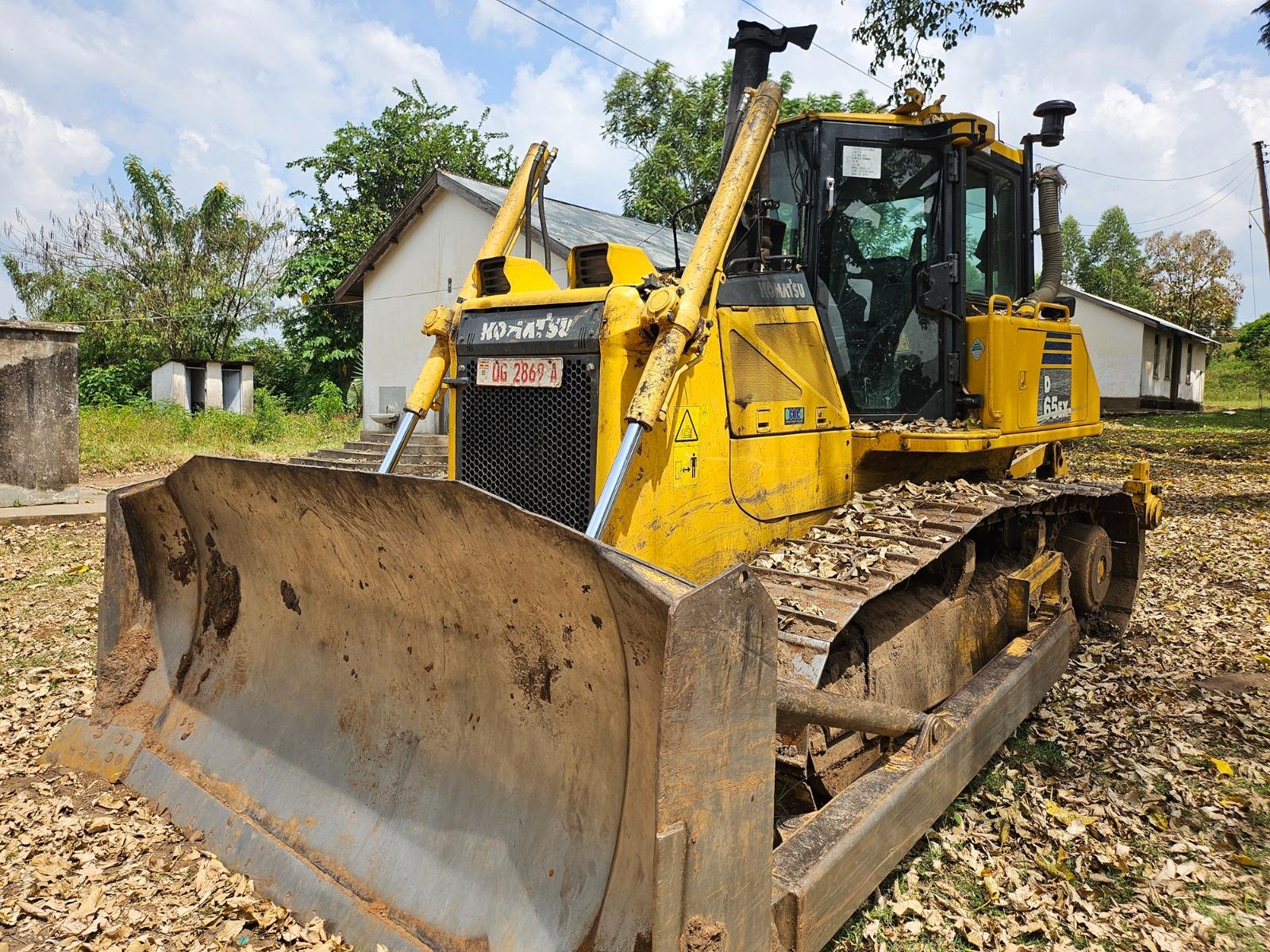
Some of the machinery that have been deployed by the Ministry of Agriculture to support various activities. Photo by Alex Pithua
Alex Pithua is news editor at Zoomer Africa, your number one grassroots infomation hub


 English
 French
