


 About Us
 الشروط
 الخصوصية
 Community Guidelines
Alur Kingdom Mourns Tooro King Oyo, Hails His Leadership and Friendship with King Rauni III
By Mike Rwothomio
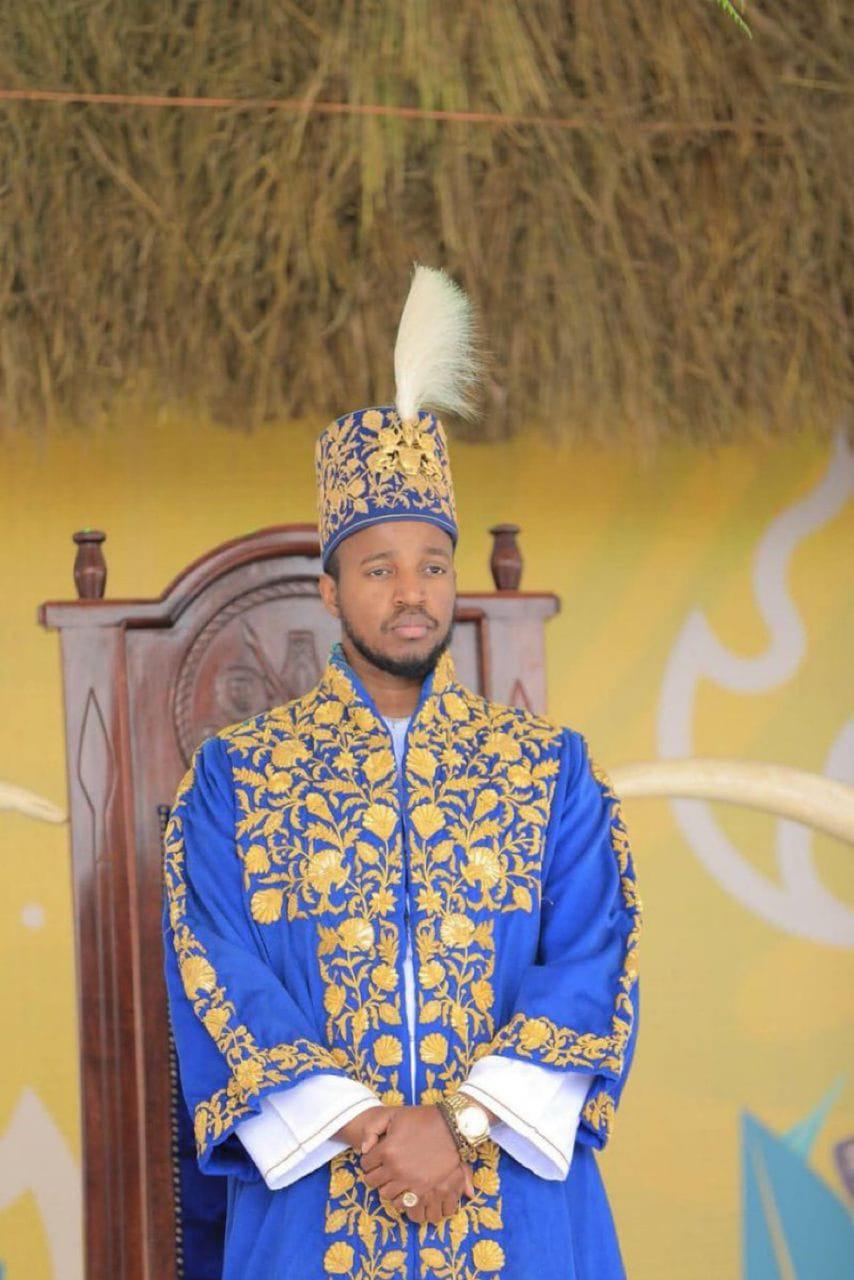
The Alur Kingdom has mourned the death of the Tooro King, Omukama Oyo Nyimba Kabamba Iguru Rukidi IV, describing his passing as a profound loss to the cultural fraternity and the country.
In a condolence message delivered on behalf of the King of Alur, His Royal Majesty Ubimu Phillip Rauni Olarker III, Alur Kingdom Prime Minister and Jadipu, Prince Lawrence Opar Angala, said the King and the entire Alur Kingdom had learnt of the death with profound sadness.
Prince Opar Angala described the late Omukama Oyo as a remarkable sovereign and a pillar of strength for culture and the nation, saying he served his people and kingdom with distinction, wisdom and dedication.
He said the death of the 34-year-old monarch was particularly painful because he passed away at a young age, before his full potential could be realised.
“The King of Alur and Omukama Oyo enjoyed a special relationship,” Prince Opar Angala said, noting that the royal houses of Alur and Tooro share deep historical and cultural links.
He added that King Rauni III held the late Tooro monarch in high regard, partly because the two were young monarchs, describing Omukama Oyo as a true friend of the Alur King.
“On behalf of King Rauni III and the entire Alur Kingdom, we convey our deepest sympathy to the Tooro royal family and all the subjects during this time of immense sorrow,” Prince Opar Angala said.
He prayed for comfort and strength for the Tooro royal family and subjects, and for the soul of the late King Oyo to rest in eternal peace.
The Tooro Kingdom Prime Minister, Calvin Armstrong Rwomiire Akiiki, confirmed that King Oyo died at around 10:00 p.m. on Thursday, August 27, 2026, describing his death as an immeasurable loss to the Royal Family, the people of Tooro and Uganda.
Born on April 16, 1992, King Oyo ascended the Tooro throne on September 12, 1995, at the age of three, following the death of his father, Omukama Patrick David Matthew Kaboyo Olimi III.
He reigned for nearly 31 years and became one of Uganda’s longest-serving cultural leaders.
The Tooro Kingdom has assured the public that the continuity of the crown is guaranteed, noting that the late King left behind a Prince who will succeed him.
Tooro Kingdom evolved out of a breakaway segment of Bunyoro sometime before the nineteenth century. It was founded in 1830 when Omukama Kaboyo Olimi I Kasunsunkwanzi, the eldest son of Omukama of Bunyoro Nyamutukura Kyebambe III of Bunyoro, seceded and established his own independent kingdom. Absorbed into Bunyoro-Kitara in 1876, it reasserted its independence in 1891. As with Buganda, Bunyoro, and Busoga, Tooro’s monarchy was abolished in 1967 by the Government of Uganda, but was reinstated in 1993.
The first kings were of the Batembuzi dynasty. Batembuzi means harbingers or pioneers.
The batembuzi and their reign are not well documented, and are surrounded by a lot of myth and oral legend. There is very little concurrence among scholars regarding the Batembuzi time period in history, even the names and successive order of individual kings.
It is believed that their reign dates back to the height of Africa’s bronze age. The number of individual batembuzi reigns, as given by different scholars, ranges from nine to twenty one.
The Bachwezi dynasty are credited with the founding of the ancient empire of Kitara; which included areas of present day central, western, and southern Uganda; northern Tanzania, western kenya, and eastern Congo. Very little is documented about them. Their entire reign was shrouded in mystery, so much so that they were accorded the status of demi gods and worshipped by various clans. Many traditional gods in Toro, Bunyoro and Buganda have typical kichwezi (adjective) names like Ndahura, Mulindwa, Wamara, Kagoro, etc
Mike Rwothomio is the news editor at Zoomer Africa your number one grassroot information hub for African news trends and updates.



 English
 French
