


 About Us
 Terms
 Privacy
 Community Guidelines
3PL Logistics Company in India: Building a More Reliable Freight Network
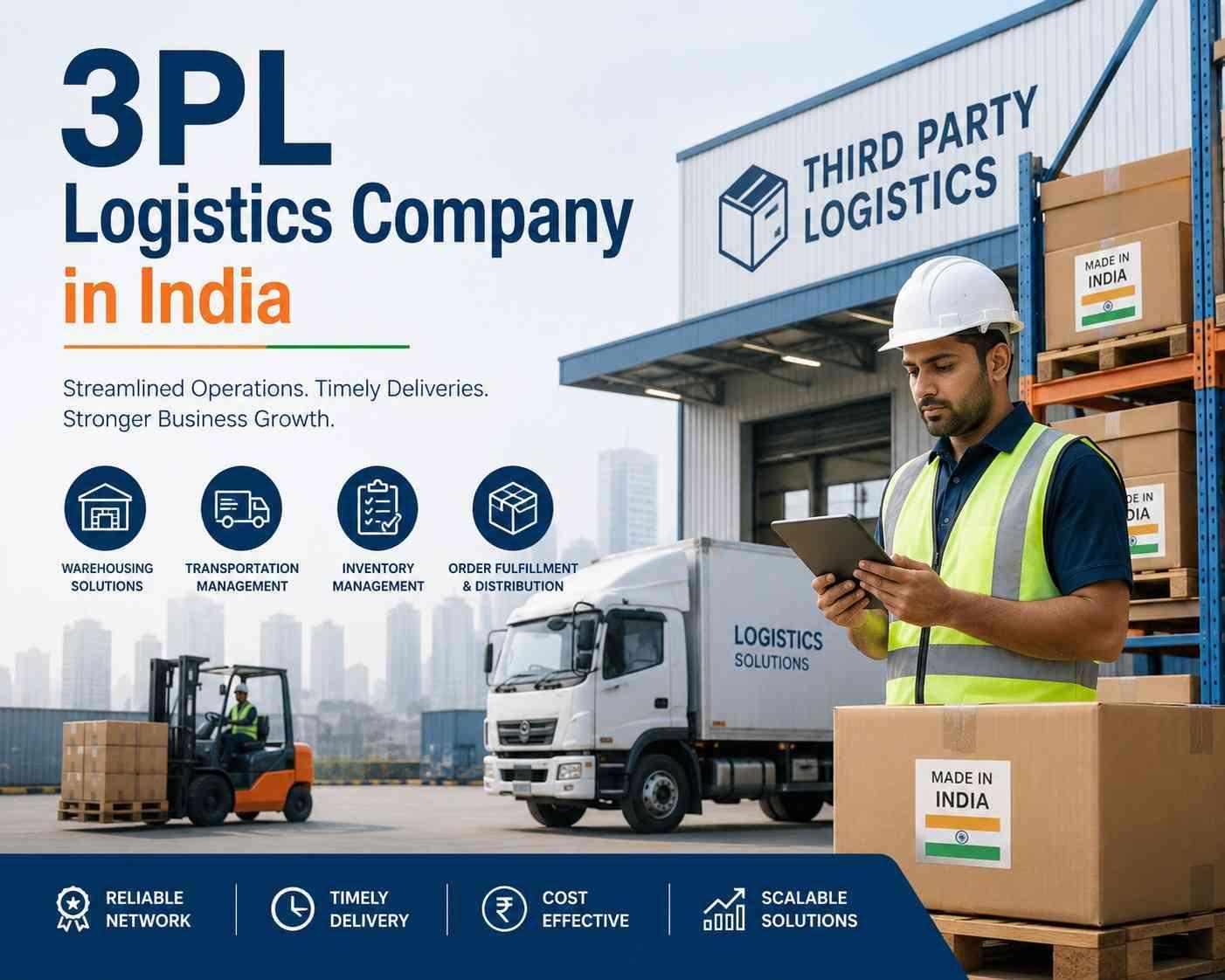
A shipment rarely moves through a supply chain as neatly as it appears on a planning sheet. One consignment may need to travel from a factory to a regional hub, another may require collection from multiple suppliers, while a third may need to reach a customer within a specific delivery window. When these movements are handled through disconnected transport arrangements, even routine freight operations can become difficult to manage. Working with a 3pl logistics company in India can help logistics businesses organise these movements through a more coordinated network.
The real challenge is not simply finding vehicles. It is making sure that capacity, cargo readiness, route planning, documentation, and delivery commitments work together. For logistics companies handling different shipment types, this coordination can have a direct impact on operating costs and customer relationships.
Why Freight Movement Needs a Connected Logistics Network
Many logistics businesses work with multiple transport operators, local vehicle owners, loading teams, warehouses, and delivery partners. This arrangement provides flexibility, but it can also create gaps in communication. A transporter may confirm vehicle availability without knowing whether the cargo is ready. A receiving location may change its unloading schedule while the dispatch team continues working with the earlier plan.
These problems become more noticeable when shipment volumes increase. A company may successfully manage a limited number of consignments through phone calls and spreadsheets, but the same method becomes difficult when several routes and customers need attention simultaneously.
A connected logistics network brings these activities into a common operating plan. Instead of managing every movement independently, businesses can coordinate collection, transportation, temporary storage, and final distribution according to shipment requirements.
This is one reason logistics operators consider external partners. A structured network can help them manage movements across different locations without building every operational capability themselves.
How a 3PL Logistics Company in India Can Improve Freight Coordination
A 3PL arrangement can be particularly useful when a logistics business handles shipments that vary in size, frequency, and destination. Some customers may require regular bulk transportation, while others send smaller consignments at irregular intervals. Treating both requirements in exactly the same way can lead to inefficient vehicle deployment.
For example, imagine a logistics operator receiving freight from several industrial suppliers. Each supplier has different loading readiness, documentation requirements, and collection timings. If vehicles are allocated without considering these differences, one delayed pickup can affect the remaining route schedule.
A third-party logistics arrangement can bring more structure to such movements. The provider may coordinate vehicle allocation, collection schedules, freight consolidation, intermediate handling, and delivery updates, depending on the agreed responsibilities.
The important point is that outsourcing should improve the movement of information as well as the movement of cargo. When dispatch teams know which shipments are ready, which vehicles are assigned, and where exceptions have occurred, they can make decisions with fewer unnecessary follow-ups.
The Hidden Cost of Poor Vehicle Utilisation
Transport expenses are not determined by distance alone. The amount of cargo carried, the number of stops, waiting periods, return journeys, and vehicle availability all influence the economics of a shipment.
A vehicle travelling with unused capacity may increase the transportation cost per unit of cargo. On the other hand, waiting too long to combine consignments can delay delivery and affect customer commitments. Finding the balance requires an understanding of shipment compatibility, route patterns, and delivery deadlines.
This is where many logistics operations struggle. Businesses sometimes focus on filling vehicle capacity without considering whether the combined consignments can realistically be delivered within their required time windows.
Freight consolidation can help when shipments have compatible destinations, handling needs, and delivery schedules. However, consolidation is not automatically economical. Additional loading, unloading, sorting, and handling can make the process more expensive if the shipment pattern is unsuitable.
A capable logistics partner should evaluate these trade-offs instead of recommending consolidation for every movement. The objective should be to use transport capacity sensibly while protecting the delivery commitments made to customers.
Managing Multiple Transport Partners Without Losing Shipment Visibility
Using multiple transport partners is common in logistics, especially when businesses serve destinations across different regions. A single operator may not have the same vehicle availability or local handling capability everywhere. Regional partnerships can help fill those gaps.
The difficulty appears when every partner follows a different reporting method. One may share updates through a transport management system, another through email, and a third through phone calls. The central logistics team then spends considerable time collecting information before it can answer a simple customer question.
A coordinated operating process should establish common expectations for shipment identification, dispatch confirmation, delay reporting, and delivery proof. Even when transport partners use different systems, the main logistics team needs a consistent record of each consignment.
A useful transport management system can support this process by bringing shipment details, vehicle assignments, route information, and delivery updates into one view. But software adoption alone will not solve the issue. Someone must be responsible for updating information accurately and escalating exceptions at the right time.
For logistics businesses, this is often more valuable than adding another tracking feature that does not connect with daily operations.
Affordable 3PL Logistics Solutions Require a Complete Cost View
Businesses searching for affordable 3PL logistics solutions should examine the cost of the entire shipment journey rather than focusing only on the quoted transportation rate.
A freight quotation may appear competitive, but the final expense can change because of loading delays, additional handling, storage requirements, route deviations, or unsuccessful delivery attempts. These costs are particularly important when a business manages recurring consignments across multiple destinations.
There is also an internal cost that is frequently ignored. Employees may spend hours coordinating different transport partners, checking delivery status, correcting documentation, and resolving billing differences. Although these activities may not appear in the freight invoice, they consume time and operational resources.
A practical comparison should consider the following:
-
Cost per shipment: Include transportation, handling, loading, unloading, and applicable additional charges.
-
Capacity planning: Review whether vehicle size and shipment volume are being matched appropriately.
-
Exception expenses: Examine waiting periods, re-delivery charges, storage costs, and route changes.
-
Administrative effort: Consider the time required to coordinate partners and reconcile shipment records.
Honestly speaking, a lower initial quotation is not necessarily a lower-cost arrangement. Businesses should compare actual shipment expenses over a reasonable operating period before changing their logistics model.
What Logistics Businesses Should Expect from a Third Party Logistics Service Provider
A third party logistics service provider should offer clarity about its role in the supply chain. The exact scope can differ considerably between businesses. Some require transportation support for selected routes, while others need a combination of freight coordination, warehousing, cargo handling, and distribution.
Before entering an arrangement, logistics managers should define the activities being transferred and the activities that will remain internal. This avoids situations where both parties assume the other is responsible for a particular task.
Documentation is another important consideration. Freight operations involve consignment details, invoices, transport documents, delivery records, and other shipment-related information. Missing or inconsistent paperwork can slow down movement and create disputes during billing or delivery confirmation.
The provider should also have a clear process for reporting operational problems. A delayed vehicle, unavailable receiving location, damaged package, or incomplete consignment needs timely communication and an identified point of responsibility.
A useful partnership is not one in which problems never occur. It is one in which problems are recorded, communicated, investigated, and resolved through an agreed process.
Choosing Between Different 3PL Logistics Services in India
Not every logistics business requires the same outsourcing arrangement. The appropriate model depends on the type of freight, number of destinations, shipment frequency, and internal resources.
A business handling industrial cargo may need reliable vehicle allocation and coordination between loading locations. A distributor may need regional storage and onward delivery. An e-commerce logistics operator may place greater importance on parcel movement, returns, and delivery confirmation.
The service scope should be selected around the actual bottleneck. Outsourcing transportation will not solve a warehouse accuracy problem, just as additional storage capacity will not correct poor route planning.
Businesses evaluating 3pl logistics services in India should also consider how easily the arrangement can expand. A provider may be suitable for a limited number of routes but struggle when the customer adds new destinations or increases shipment frequency. Discussing capacity limits and expansion procedures before signing an agreement can prevent difficult conversations later.
One sensible approach is to test the service on a specific shipment category or route. Track the actual cost, communication quality, delivery performance, and time spent resolving issues. The results provide a more realistic basis for expanding the arrangement.
How 3rd Party Logistics Companies in India Are Responding to Operational Changes in 2026
The logistics sector is increasingly influenced by changing customer expectations, digital documentation, shipment visibility, and the need for more flexible transport capacity. In 2026, logistics businesses are paying closer attention to how information moves between transport partners and customers.
Digital freight records can help reduce dependency on scattered paperwork. Route and shipment data can support decisions about vehicle allocation, recurring delays, and capacity requirements. Integrated systems can also make it easier to connect transport activity with warehouse and distribution operations.
Another important shift is the growing need for adaptable networks. Businesses may need different transport arrangements during seasonal demand, regional supply disruptions, or changes in customer order patterns. A logistics network that depends entirely on one fixed arrangement may find these changes difficult to absorb.
For 3rd party logistics companies in India, the opportunity lies in combining operational flexibility with dependable processes. Technology can improve visibility, but service quality still depends on accurate information, capable teams, and clear responsibility at every stage.
Conclusion
A strong logistics network is not defined by the number of vehicles or warehouses a company can access. It is defined by how effectively those resources work together to move cargo from collection to final delivery.
For logistics businesses, a 3PL partnership can provide additional coordination and operational capacity without requiring every function to be managed internally. However, the decision should be based on shipment patterns, complete costs, service responsibilities, and the provider's ability to handle changing requirements.
Before choosing a partner, identify where delays, unnecessary expenses, and communication gaps are occurring. Then select the services that directly address those issues. A carefully designed logistics arrangement can support business growth while keeping freight movement easier to monitor and manage.
Frequently Asked Questions
1. What services does a 3PL logistics company in India provide?
Ans. Services may include freight transportation, warehousing, cargo handling, shipment coordination, inventory support, and distribution. The exact scope depends on the business requirement and the agreement with the provider.
2. How can 3PL services help reduce transportation costs?
Ans. Better vehicle allocation, suitable freight consolidation, route planning, and reduced waiting periods can help control expenses. Businesses should evaluate the complete shipment cost rather than comparing freight rates alone.
3. Are affordable 3PL logistics solutions suitable for growing logistics businesses?
Ans. Yes, they can provide access to additional transport or warehousing capacity without requiring the business to develop every resource internally. The provider's ability to handle higher volumes should be checked before expansion.
4. What should I check before selecting a third party logistics service provider?
Ans. Review service coverage, vehicle availability, reporting procedures, documentation practices, pricing conditions, and exception management. A trial on selected routes can help assess actual performance.
5. How do 3PL logistics services in India support multi-location shipments?
Ans. They can coordinate transportation, intermediate handling, regional storage, and onward distribution. Clear shipment records and communication between partners are essential when cargo passes through multiple locations.

 Arabic
 French
